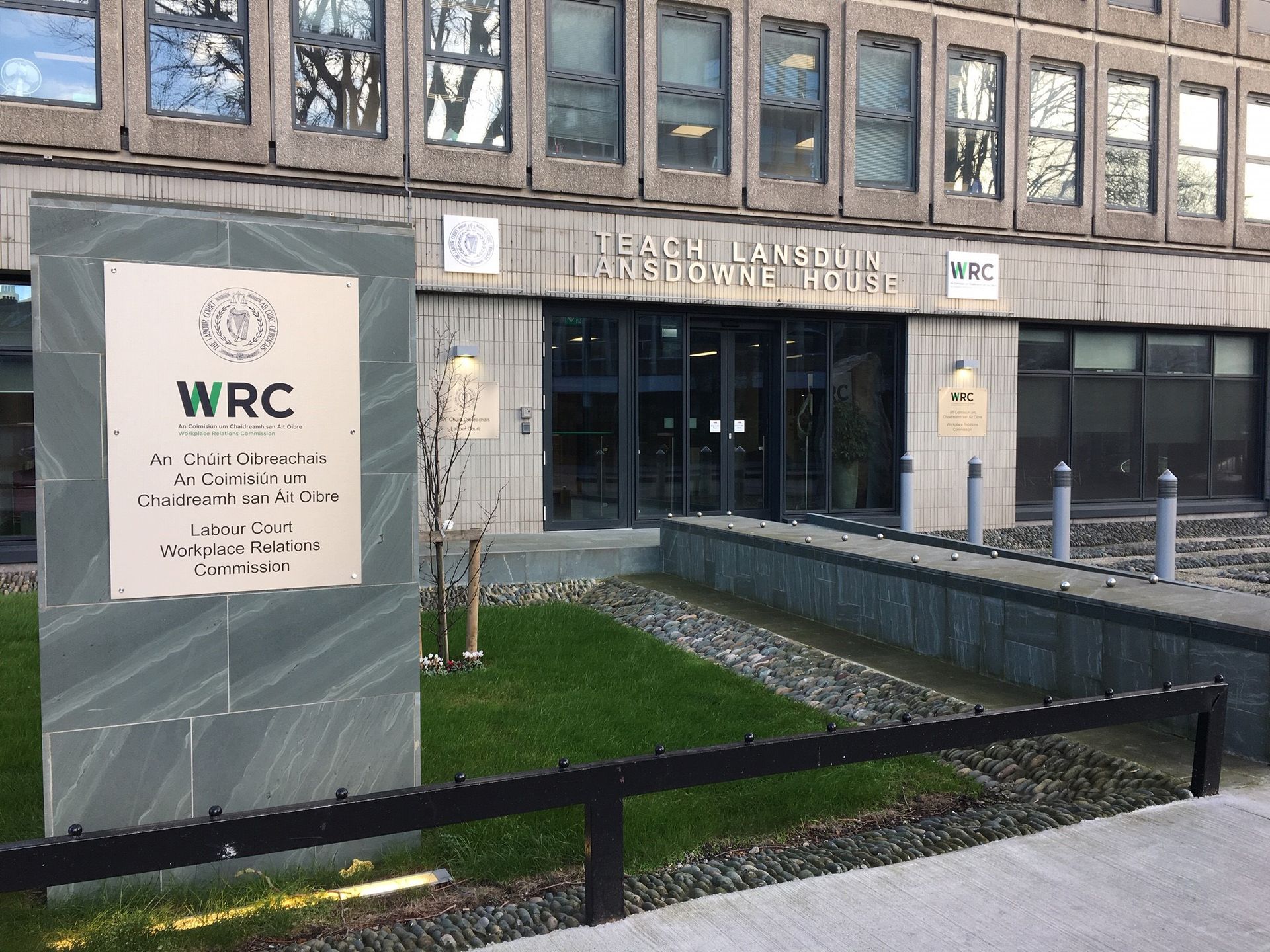
WRC Finds Employee Was Penalised After Raising Concerns About Pay and Tax
A recent Workplace Relations Commission decision highlights the importance of understanding what may constitute a protected disclosure and the risks for employers when an employee raises concerns about potential breaches of employment or other legal obligations.
In this case, an employee raised concerns about how her salary was being treated for tax and PRSI purposes and subsequently objected to a proposed significant reduction in her salary.
The WRC found that her concerns about the taxation of her salary amounted to a protected disclosure and that the termination of her employment after she raised these concerns constituted penalisation.
The employee was awarded €10,000 in compensation.
Background
The complainant was employed as an Account Executive from January 2025 until July 2025 and worked remotely from Spain for an Irish company.
During her employment, the employee raised concerns about the taxation of her salary.
She stated that she had been told by the employer that she did not have to pay income tax or PRSI and that her salary would be paid to her without the usual statutory deductions.
The employee questioned this position, particularly as she understood that she was employed under an Irish employment contract.
In July 2025, the employee was also informed of a proposed significant reduction in her salary.
According to the employee, the proposed change would have reduced her base salary by 60% and her fixed salary by 40%.
She raised concerns about the proposed reduction and attempted to engage with the employer regarding the change.
Following her objections, the employee stated that she was told that the employer had lost trust in her and that she should resign.
When she declined to resign, she was locked out of the company's computer system and was subsequently informed that her employment was ending.
The employee argued that the termination of her employment was penalisation for raising concerns which amounted to protected disclosures.
What did the WRC consider to be a protected disclosure?
Under the Protected Disclosures Act, a protected disclosure can arise where a worker, in the reasonable belief that the information is true, raises information which tends to show a relevant wrongdoing.
Relevant wrongdoings include circumstances where a person has failed, is failing or is likely to fail to comply with a legal obligation.
In this case, the WRC considered the employee's repeated concerns about the taxation of her salary.
The employee had questioned why PAYE and PRSI were not being deducted from her salary and sought clarification from the employer.
The WRC found that these concerns related to a potential failure to comply with a legal obligation.
The Adjudication Officer therefore found that the employee's concerns regarding the taxation of her salary constituted a protected disclosure.
The employee's dismissal
The WRC then considered whether the employee had been penalised for making the protected disclosure.
The Protected Disclosures Act provides protection against penalisation for making a protected disclosure.
In this case, the WRC considered the sequence of events to be significant.
The employee had repeatedly raised concerns regarding the taxation of her salary.
She then challenged the proposed reduction in her pay.
Following her objections, she was accused of displaying "extreme behaviour", was encouraged to resign, was locked out of the company's systems and her employment was subsequently terminated.
The WRC concluded that the way the employee was treated, including the immediate dismissal following her raising these concerns, amounted to an act of penalisation.
The complaint under the Unfair Dismissals Act was therefore found to be well founded.
The award
The WRC directed the employer to pay the employee €10,000 in compensation.
The employee also brought complaints under the Terms of Employment (Information) Act and the Payment of Wages Act in relation to the proposed reduction in her salary.
These complaints were not upheld.
The WRC noted that the proposed salary reduction had not actually taken effect before the employment ended. As a result, the Payment of Wages complaint was not well founded.
Similarly, as the proposed changes to the employee's earnings were not implemented, the complaint relating to notification of changes to terms of employment was not upheld.
The successful complaint therefore centred on the employee's dismissal and the finding of penalisation for making a protected disclosure.
What does this mean for employers?
This case is a useful reminder that employers need to take care when an employee raises concerns about potential legal or regulatory non-compliance.
Not every workplace complaint will constitute a protected disclosure.
The Protected Disclosures Act specifically excludes certain interpersonal grievances and complaints that concern a worker exclusively. However, where an employee raises information which may indicate a relevant wrongdoing, employers should consider whether the disclosure may fall within the protection of the legislation.
Employers should therefore:
- Take concerns about potential legal or regulatory breaches seriously
- Avoid making assumptions about an employee's motivation for raising a concern
- Consider whether the concern could constitute a protected disclosure
- Follow the company's protected disclosures policy and procedure where appropriate
- Ensure that any action taken against an employee is not connected to the fact that they have made a protected disclosure
- Keep a clear record of the reasons for any management decisions affecting the employee
- Seek HR or legal advice before taking disciplinary or other action where a protected disclosure has been raised
This is particularly important where an employee raises a concern and then shortly afterwards becomes subject to disciplinary action, changes to their role or terms, suspension, dismissal or another action that could potentially be viewed as penalisation.
Proposed changes to pay
The case also highlights the importance of properly managing proposed changes to an employee's terms and conditions.
An employer cannot simply assume that a proposed change to an employee's salary can be introduced without agreement or appropriate consideration of the employee's contractual and statutory rights.
In this case, the proposed salary reduction was not ultimately implemented because the employment relationship ended before the change took effect.
While the WRC did not uphold the Payment of Wages complaint in relation to the proposed reduction, the circumstances demonstrate how quickly a proposed change to pay can become a significant employee relations issue.
Employers considering changes to pay or other contractual terms should take appropriate HR and employment law advice before communicating or implementing the change.
Key takeaway for employers
The key lesson from this decision is the importance of pausing and properly considering an employee's concerns before taking action.
Where an employee raises concerns about potential legal or regulatory wrongdoing, employers should consider whether the issue could amount to a protected disclosure and ensure that any subsequent management action is handled appropriately.
The timing and circumstances surrounding decisions affecting an employee can be particularly important where a protected disclosure has been made.
Having a clear protected disclosures policy, ensuring managers understand how to recognise a potential protected disclosure and taking appropriate advice before taking action can help employers manage these situations properly.
If you have received a protected disclosure from an employee, are unsure whether an employee's complaint could constitute a protected disclosure or need support managing a protected disclosure process, MSS The HR People can help.
Get in touch with our HR team for practical advice and guidance on managing protected disclosures and other sensitive employee relations matters on 01 8870 690 or email at info@mssthehrpeople.ie
Read the Decision here