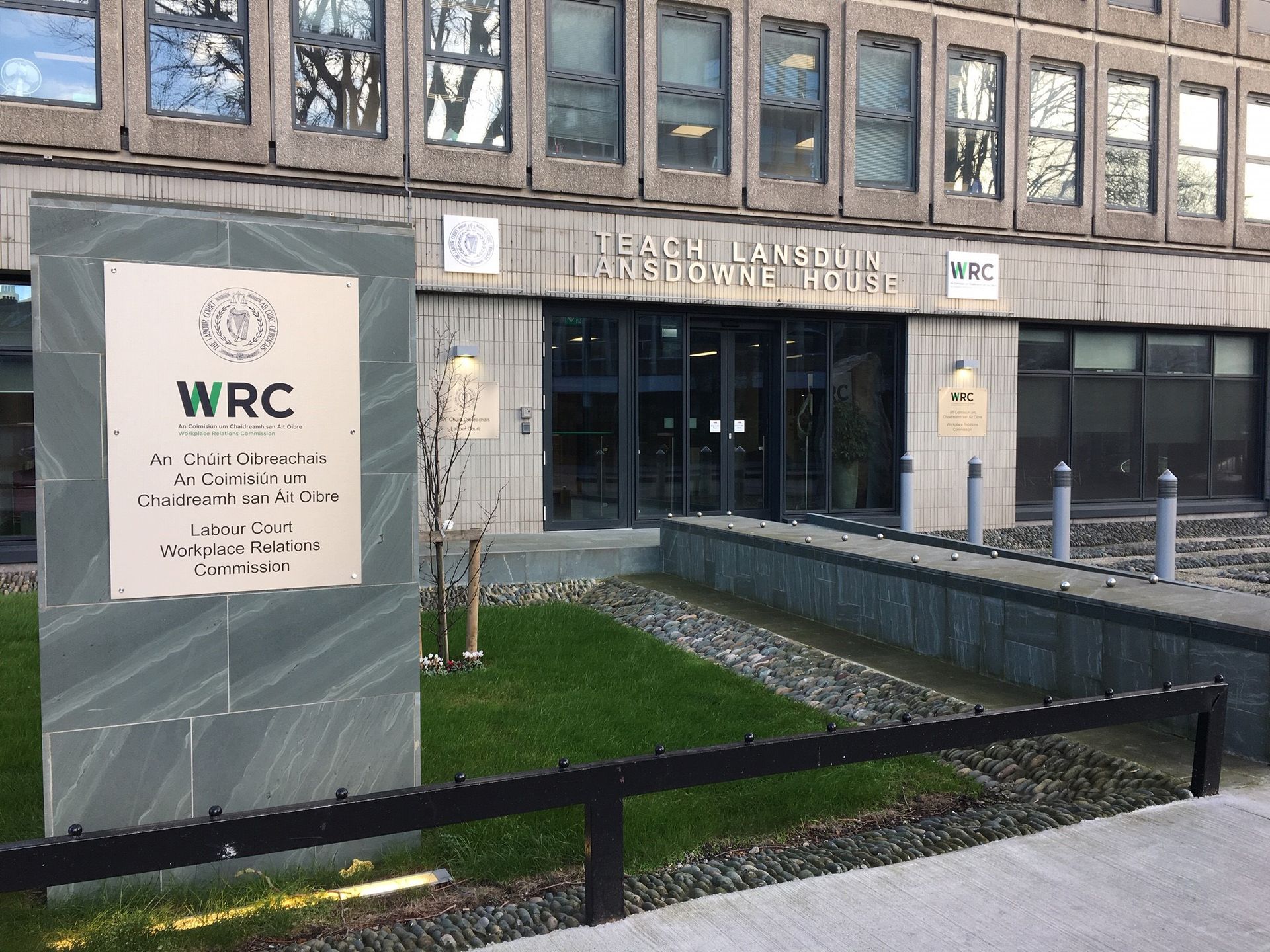
Domestic Violence Leave Update

November 29, 2023

The Work-Life Balance and Miscellaneous Provisions Act 2023, introduced, earlier this year, Domestic Violence Leave, which came into effect from Monday 27th November 2023, and aims to provide support for victims of domestic violence.


Domestic Violence Leave Entitlement


Employees experiencing, or at risk of domestic violence, are now entitled to 5 days paid Domestic Violence Leave, within any consecutive 12-month period.


The leave can be taken without prior notice and can be used to access help from An Garda Síochána; source alternative accommodation; get a court order; seek medical attention; go to victim services organisations; seek counselling or other services.


This leave will be paid at the Employee’s regular pay and will include any additional premiums and allowances. Employers will need to ensure their payroll and recording systems allow for this new leave payment and that such payments are processed accordingly.  


This leave may be taken together or as separate days.


Notice Given to Employer


When an Employee takes Domestic Violence Leave, they must inform their Employer they are going to, or have taken the leave and must also specify the dates on which the leave was taken, so that the Employer can give the appropriate support to the Employee during this time.


Employers should ensure payroll are appropriately notified where any payments are required, however, bearing in mind that it is advisable only essential information is shared for the purpose of payments required.


Details of domestic violence leave should be processed in accordance with General Data Protection Regulations (GDPR) and confidentiality should be maintained.


The Employee is not required to provide any evidence in support of the Domestic Violence Leave.


Next Steps for Employers


Employers are now also required to put in place a Domestic Violence Leave Policy and to keep a record of Domestic Violence Leave for a minimum of three years.


They should also nominate a designated contact person for the purpose of this policy and arrange for appropriate training.


A sample Domestic Violence Leave Policy and Domestic Violence Leave Request Form are available on the MSS HR Hub.


If you need any further guidance, please contact our HR Support Team and we will be happy to help you. 


By Tara Daly February 4, 2026
The Workplace Relations Commission (WRC) has updated its Code of Practice on Access to Part-Time Work, providing clearer guidance on best practices for employers and employees in today’s flexible working environment. While the revised Code is similar to the previous version, it adopts a more positive tone towards part-time work, presenting it as a modern and flexible way of working rather than an exception . In particular, the Code places greater emphasis on work–life balance considerations, including from the perspective of parents and carers. Although the Code does not create a legal right to part-time work, it sets clear expectations for employers in terms of how requests should be handled and reinforces the importance of fair and consistent treatment of employees. Key Updates and Takeaways Part-Time Work as a Positive Option The updated code recognises part-time work as a valuable way to enhance labour market participation and provide flexibility. Employers are encouraged to view part-time arrangements as a strategic and beneficial option, rather than a limitation. Equal Treatment A central principle of the code is that part-time employees must not be treated less favourably than full-time employees. This means that pay, benefits, access to training, and career progression should be proportionate and fair, ensuring that part-time staff are not at a disadvantage. Structured Procedures for Requests A key development in the revised Code is the increased emphasis on employers adopting a clear, step-by-step framework when dealing with requests to move between full-time and part-time work. Employers are encouraged to: Review and update policies to reflect the code’s guidance. Respond to requests following a clear, structured procedure. Provide meaningful reasons if a request cannot be accommodated. Rather than informal consultation alone, requests should now be considered through a structured and documented process. Flexible Roles and Recruitment The revised Code encourages employers to consider whether part-time working can be accommodated at the point of job design and recruitment. This may include job-sharing arrangements, flexible schedules, or adjusting workloads to maintain role effectiveness. Responsibilities of Employers and Employees Under the revised code, employers are expected to establish clear policies, actively monitor roles for flexibility, provide part-time employees with equal access to training, and ensure that no employee is penalised for requesting part-time work. It is equally important to communicate with all staff about part-time opportunities, including how to request them and the criteria used to assess requests. Clear communication helps maintain transparency and ensures a fair, consistent approach to flexible working across the organisation. Employees, in turn, are responsible for complying with agreed arrangements, understanding that not all roles may be suitable for part-time work, and performing their duties as required. Both employers and employees play an important role in making part-time arrangements fair, transparent, and effective. Legal Relevance Although the code is not legally binding, it is admissible in evidence. Adjudicators may rely on it when assessing whether an employer’s approach to part-time work requests is reasonable, fair and aligned with best practice. What Does This Mean for Your Business? The revised Code encourages employers to take a more structured and considered approach to part-time working, while also protecting the operational needs of the business. For SMEs in particular, clear procedures and consistent decision-making are essential to managing requests effectively and avoiding unintended legal or operational risks. Having a documented process helps employers demonstrate fair consideration of requests, apply objective business grounds where flexibility is not feasible, and maintain continuity of service. Done properly, part-time arrangements can support retention and engagement without undermining productivity or resourcing.  Part-time work should not be viewed as an automatic entitlement or an informal arrangement. Employers are encouraged to review their policies, communicate expectations clearly, and ensure that any flexibility granted is sustainable, consistent, and defensible if challenged. If you need any assistance reviewing your company policies in line with this revised Code of Practice, please do not hesitate to contact MSS The HR People. PH: 018870690 Email: info@mssthehrpeople.ie
By Tara Daly February 4, 2026
A recent Workplace Relations Commission (WRC) decision highlights the significant risks employers face when they fail to follow fair procedures in managing employee illness and highly sensitive personal circumstances. In this case, a sushi chef who was dismissed shortly after suffering a miscarriage was awarded €8,000 in compensation for unfair dismissal. The decision serves as an important reminder to employers that regardless of previous concerns around attendance or conduct, employers must act reasonably, compassionately and in accordance with fair procedures. Background of the Case The complainant was employed as a sushi chef with Beacon Sushi Limited. In early 2024, she informed her employer that she was unwell and subsequently confirmed that she had suffered a miscarriage. She later provided a medical certificate covering her absence from work. Approximately five days after the miscarriage, the employee received a WhatsApp message notifying her that her employment was being terminated and that she was expected to work her notice period, even though she was medically unfit to do so at the time. The employer claimed that the dismissal was due to concerns regarding timekeeping and the employees alleged failure to follow the company’s absence reporting procedures. WRC Findings The WRC adjudication officer found that the dismissal was unfair and was critical of the manner in which the employer handled the situation. The WRC noted that the dismissal letter did not set out any clear reasons for termination and that no meeting was held with the employee prior to the decision being made. In addition to this, the employee was never given an opportunity to respond to the concerns raised, nor was she afforded a right of appeal. The adjudicator also considered that the employer was aware of the employee’s medical circumstances when the dismissal decision was made. The WRC found that dismissing an employee in such circumstances, while she was on certified sick leave and without any fair or transparent process, fell well short of the standards required under Irish employment law. As a result, the employee was awarded €8,000 in compensation for unfair dismissal. Key Lessons for Employers This case serves as a reminder that fair procedures are essential in all dismissal situations, regardless of the surrounding circumstances. Even where an employer believes there are legitimate concerns relating to attendance or conduct, employees must be informed of those concerns, given a meaningful opportunity to respond, and provided with access to an appeal process. The decision also highlights the need for particular care where an employee is medically vulnerable or experiencing significant personal trauma. Employers are expected to exercise sensitivity and sound judgement when managing illness-related absences, particularly when the employer is already aware of the employee’s medical condition. Dismissals that take place during periods of certified sick leave carry an increased level of risk and will be closely scrutinised by the WRC. This risk is further heightened where dismissals are communicated informally, such as by text message or WhatsApp. Informal communication around dismissals has been repeatedly criticised by the WRC. Finally, the case demonstrates that management policies should be applied thoughtfully and must consider the individual circumstances at hand, rather than being rigid. While policies provide an important framework, they should not be used as a substitute for fair judgement or proper procedures. Conclusion This WRC decision is a timely reminder of the legal and reputational risks that can arise when employers fail to follow fair procedures, particularly in cases involving illness or sensitive personal circumstances. Employers should regularly review their practices around sick leave management, disciplinary procedures and dismissals, to ensure compliance with employment legislation and alignment with best practice.  If you require advice on managing sick leave, dismissals or disciplinary processes, please do not hesitate to contact MSS The HR People: Ph 018870690, Email: info@mssthehrpeople.ie
The Cost of a Bad Hire: Why Recruitment Decisions Matter More Than Ever
By Tara Daly February 4, 2026
A bad hire is no longer just inconvenient. In today’s environment, a poor recruitment decision can cost an organisation tens of thousands of euro
When Workplace Rights Collide: UK Tribunal Ruling Highlights Employer Risk Complaint
By Tara Daly February 4, 2026
A recent UK tribunal decision highlights the challenges employers face in balancing competing workplace rights, particularly around sex, gender identity and dignity.
Recruitment in 2026: Why Employers Are Struggling to Attract Talent and What Actually Works
By Tara Daly February 4, 2026
Recruitment in 2026 is no longer about filling vacancies its about understanding candidate behaviour, expectations and risk tolerance in a post pandemic, high cost of living labour market.
WRC Awards €6,500 in Discriminatory Dismissal Sick Leave Case
By Tara Daly February 4, 2026
A recent WRC decision highlighted the importance of handling sick leave and disability accommodations appropriately in the workplace.
By Tara Daly February 4, 2026
Salary transparency is no longer optional.
Revenue Clampdown on ‘Bogus’ Self-Employment
By Tara Daly February 4, 2026
Revenue Commissioners are stepping up enforcement against bogus self-employment, situations where workers are incorrectly classified as self-employed
Last Minute Regulation on Auto Enrolment
By Tara Daly January 7, 2026
Last minute regulation signed by the Minister for Social Protection provides important clarification for employers ahead of the introduction of My Future Fund.
The EU Pay Transparency Directive: What Employers Need to Prepare for in 2026
By Tara Daly January 7, 2026
The Directive is designed to address gender pay inequality by increasing transparency around pay, recruitment practices and internal pay structures.