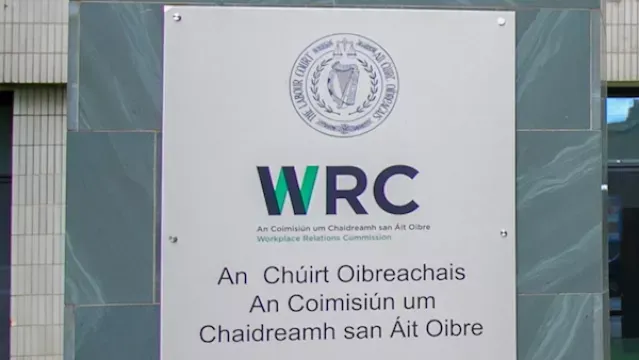
WRC Criticises Employer Conduct, Workplace Practices and AI Generated Submission

June 4, 2026

Click Here to Read Decision ADJ-00062061


A recent WRC decision contains a number of interesting lessons for employers around workplace culture, harassment, credibility, compliance failures and the use of AI generated material within employment law processes.


The case involved complaints brought by an employee of a café business following a change of ownership. While some aspects of the complainant’s case were unsuccessful, the adjudicator upheld complaints relating to harassment and failures to provide statutory terms and conditions documentation. The complainant was awarded a total of €7,524.


One of the most significant aspects of the decision was the harassment finding itself.


The complainant alleged that the owner repeatedly referred to her as “Sophia Vergara” because of her accent and that he mocked the way she spoke.


Importantly, the adjudicator noted that the respondent did not deny referring to the complainant in this way. The adjudicator ultimately concluded that the complainant’s accent had been ridiculed and that this amounted to harassment under the Employment Equality Acts.


This aspect of the decision is particularly important because it demonstrates how comments that may appear casual or insignificant within a workplace can nevertheless create legal exposure for employers.


In many workplace cultures, comments relating to accents, nationality, personal characteristics or stereotypes can sometimes become normalised or dismissed as humour or workplace banter. However, this decision serves as a reminder that comments linked to protected characteristics may easily cross the line into inappropriate conduct, particularly where an employee feels singled out, mocked or ridiculed.


Interestingly, the adjudicator did not uphold all elements of the complainant’s allegations. The complainant also raised concerns regarding alleged racist comments and the removal of Pride flags from the café. However, the adjudicator found there was insufficient evidence to uphold these aspects of the complaint.


This is an important learning point for employers. WRC decisions are often nuanced and highly fact specific. An employer does not need to lose every aspect of a claim for liability to arise. In this case, the adjudicator distinguished between allegations where there was insufficient evidence and the specific conduct they were satisfied amounted to harassment.


Another particularly notable feature of the decision was the adjudicator’s broader commentary regarding the operation and management of the business itself.


The adjudicator described the café as “a disorganised place to work” and criticised what was described as a “cavalier attitude” towards basic compliance obligations, including HACCP procedures and CCTV practices.

The complainant alleged that there were no proper food safety procedures in place when she commenced employment and that she had to introduce HACCP procedures herself so the business could operate legally.


The decision also referenced concerns regarding CCTV monitoring within the café, including allegations that the owner could remotely monitor staff and customers through audio facilities attached to the camera system.


Separately, the adjudicator upheld a complaint relating to the employer’s failure to provide a five day statement of core terms and conditions of employment as required under legislation.


Taken together, the case highlights how multiple smaller workplace issues can collectively create a very negative overall impression before the WRC.


Another interesting aspect of the decision was the adjudicator’s comments regarding the employer’s use of AI generated material during the WRC process. The adjudicator stated that the use of AI in submissions contributed to concerns regarding the reliability of WhatsApp messages and correspondence relied upon during the hearing as evidence.


While the WRC has already issued guidance regarding the use of AI within workplace and adjudication processes, this decision is an important reminder that employers should exercise caution when relying on AI generated submissions or documentation, particularly where communications or evidence are disputed. Any material prepared using AI assistance should be carefully reviewed for accuracy, consistency and credibility before being relied upon within a formal legal process.


The adjudicator also specifically noted that she found the complainant to be a credible witness and found the employer “less so.”


This again reinforces how important credibility, consistency and professionalism can become during WRC proceedings.


Overall this case is a useful reminder that workplace complaints are rarely assessed in isolation. Workplace culture, management style, documentation, operational compliance, communication standards and credibility can all significantly influence how a case is viewed and ultimately decided.


If you would like support reviewing dignity at work procedures, workplace culture, management training or compliance documentation, or if you require representation before the WRC, MSS The HR People can help.


Contact us at info@mssthehrpeople.ie, call +353 1 887 0690 or visit www.mssthehrpeople.ie.


Amy Vickers

WRC Upholds Constructive Dismissal and Protected Disclosure Complaints
By Amy Vickers June 4, 2026
Health and safety concerns, deteriorating workplace relationships and poor record keeping create significant exposure for employers
Is workplace conflict increasing, or are employees less tolerant?
By Amy Vickers June 4, 2026
Are workplaces actually becoming more difficult or are employees simply becoming far less willing to tolerate behaviour that previous generations may have ignored
How Long Is Too Long? The Cost of Delayed Recruitment Decisions
By Amy Vickers June 4, 2026
Many employers would be surprised to learn how often good candidates are lost because a recruitment process takes too long.
By Tara Daly May 19, 2026
Irish employers are increasingly turning to international hiring as a solution to ongoing skills shortages. This trend is particularly evident in sectors where local talent is limited and demand continues to grow. Why employers are looking overseas Common drivers include: • Difficulty filling specialist roles locally • Business expansion and growth • Increased competition for talent International hiring can provide access to a wider talent pool and support long-term workforce planning. The challenge While the opportunity is clear, the employment permit process can be complex. Employers often underestimate: • The level of detail required in applications • The importance of aligning with eligibility criteria • The potential for delays or refusals Where the process is not managed properly, the impact can be significant. Roles remain open for longer, business plans are affected, and onboarding timelines move further out than expected. Getting it right A structured and informed approach is essential. This includes: • Understanding the appropriate permit type • Ensuring the role meets eligibility requirements • Preparing a clear and robust application Where employers take the time to position the role properly and support the application with strong documentation, the process is far more likely to run smoothly. Key takeaway for employers International hiring can be a highly effective solution, but only where the permit process is managed correctly. Approached properly, it enables businesses to secure the talent they need to grow and succeed with greater certainty and less disruption. If you would like advice or support with the employment permit process, our team would be happy to assist. info@mssthehrpeople.ie | 01 887 0690
By Tara Daly May 13, 2026
A common approach we encounter is employers submitting an employment permit application and waiting to see what happens. While understandable, this approach carries significant risk. Why this approach falls short Employment permit applications are not a simple box-ticking exercise. Each application is assessed based on: • Eligibility • Justification • Alignment with current criteria If any of these elements are unclear or insufficient, the application may be delayed or refused. The impact of getting it wrong Where an application is unsuccessful: • Timelines are extended • Recruitment plans are disrupted • Candidates may withdraw In a competitive hiring market, these delays can have a real impact on the business. A role can remain unfilled for longer than expected, existing teams can come under pressure, and a strong candidate may choose another opportunity. A better approach Employers should approach permit applications as a structured process, focusing on: • Clear alignment with eligibility criteria • Strong and accurate role definition • Comprehensive supporting rationale It is far more effective to identify and address risk areas before submission than to deal with the consequences of delay or refusal later. Key takeaway for employers Submitting an application without fully assessing the risks can lead to avoidable delays. A well-prepared application significantly improves the likelihood of a successful outcome and gives the employer greater confidence throughout the process. If you’re planning an overseas hire or facing delays, we’re happy to talk it through. info@mssthehrpeople.ie | 01 887 0690
WRC awards €15,000 after employee kept on “specific purpose” contract for 10 years
By Amy Vickers May 7, 2026
A recent WRC decision is a very important reminder to employers that long running “specific purpose” and fixed term arrangements can create significant risk
Workplace Bullying, Harassment and Sexual Harassment Claims Are Rising
By Amy Vickers May 7, 2026
Increase in complaints relating to bullying, harassment, and sexual harassment and the complexity and escalation of these cases.
Supporting Employees Through Pregnancy Loss
By Amy Vickers May 7, 2026
Pregnancy loss is a deeply personal experience. For employers, these situations can be equally challenging because of the uncertainty around it.
Psychological Illness Now the Leading Cause of Income Protection Claims in Ireland
By Amy Vickers May 7, 2026
significant shift in workplace health trends, with psychological illness now the most common cause of income protection claims in Ireland.
By Tara Daly May 5, 2026
Delays in employment permit applications are a frequent frustration for employers. Many assume the issue lies with processing times or administrative backlogs. In reality, the most common cause of delay is something else entirely. The real issue: misalignment The number one reason applications are delayed is misalignment with the eligibility criteria. This can include: • Roles that are not clearly defined • Job descriptions that do not match the required skill level • Weak or generic supporting information On the surface, an application may appear complete. However, if it does not clearly demonstrate eligibility, it is likely to encounter delays or queries. Why this happens Employers often approach the process as an administrative task. In practice, each application is assessed on its merits, and clarity is critical. How to avoid delays To reduce the risk of delay: • Ensure the role clearly meets eligibility requirements • Align job descriptions with the actual duties and level of the role • Provide strong, specific supporting information It is also important to review the application from the perspective of the decision-maker. If the application leaves room for doubt, it is far more likely to be delayed while clarification is sought. Key takeaway for employers Employment permits are not delayed because of missing forms. They are delayed because the application does not clearly meet the criteria. Understanding how your application will be assessed is essential, particularly where timelines are already under pressure and the business needs certainty around a key hire. If you’re planning an overseas hire or facing delays, we’re happy to talk it through. info@mssthehrpeople.ie | 01 887 0690