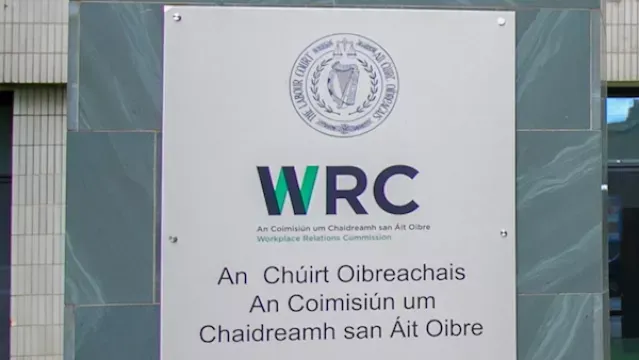
WRC Upholds Constructive Dismissal and Protected Disclosure Complaints

June 4, 2026

Click Here to Read Decision: ADJ-00045744


Health and safety concerns, deteriorating workplace relationships and poor record keeping create significant exposure for employers


A recent Workplace Relations Commission decision, ADJ-00045744, serves as an important reminder for employers of the significant risks that can arise where employee concerns relating to health and safety and workplace compliance are not managed appropriately.


The case involved a number of complaints brought by an employee, against Timber Frame Projects Limited / Timber Frame Ireland. The complaints included constructive dismissal, penalisation under the Protected Disclosures Act, breaches of working time legislation and failures relating to terms and conditions documentation.


The employee worked as a carpenter/site worker and alleged that throughout his employment he regularly worked excessive hours, did not always receive appropriate rest breaks and raised concerns regarding health and safety and workplace practices on site.


According to the decision, the employee made a number of complaints and observations regarding safety concerns and compliance related matters during the course of his employment. The adjudicator accepted that these concerns constituted protected disclosures under the Protected Disclosures Act.


Importantly, the employee had not submitted a formal “whistleblowing complaint” or specifically described his concerns as protected disclosures. However, the adjudicator noted that this was not necessary for statutory protection to apply.


This is a particularly important point for employers.


In practice, many managers still associate protected disclosures with formal whistleblowing procedures or major allegations of wrongdoing. However, concerns raised informally by employees regarding health and safety, legal compliance or workplace practices may still attract protection under the legislation.


The adjudicator found that following the raising of these concerns, the relationship between the employee and the employer deteriorated significantly. Tensions developed within the workplace and the employee alleged that his treatment changed after concerns had been raised.


The decision highlights how quickly workplace relationships can become strained once concerns relating to safety or compliance issues emerge, particularly in smaller or operationally pressured workplaces where managers may feel personally challenged by complaints being raised.


One of the key findings in the case was that the employee suffered penalisation connected to the protected disclosures made.


The Protected Disclosures Act provides very significant protections for employees who raise concerns relating to relevant wrongdoing. Employers should be aware that penalisation is interpreted broadly and can include not only obvious disciplinary action or dismissal, but also changes in treatment, deterioration in workplace relationships, exclusion, hostility or other negative consequences following disclosures being made.


The case also involved several complaints under working time legislation.


The employee alleged that he regularly worked excessive hours and that appropriate records were not maintained. The adjudicator was critical of the employer’s inability to produce adequate working time records demonstrating compliance with statutory obligations.


This continues to be an area where many employers remain exposed.


Employers frequently rely on informal arrangements, verbal understandings or assumptions regarding hours worked, particularly in construction, hospitality and operational environments. However, where WRC claims arise, employers carry the burden of demonstrating compliance through proper records.


The absence of adequate records can significantly weaken an employer’s defence, even where the employer disputes the employee’s account.


The adjudicator also upheld the constructive dismissal complaint.


Constructive dismissal cases are notoriously difficult for employees to win, as employees must generally demonstrate that the employer’s conduct was sufficiently serious to justify resignation. However, in this case, the adjudicator found that the combination of the deteriorating relationship, the handling of the concerns raised and the breakdown in trust and confidence contributed to the employee’s resignation.


One of the more interesting aspects of this decision is that it demonstrates how multiple smaller issues can combine to create substantial legal exposure for employers.


There was no single dramatic incident at the centre of the case. Instead, the findings arose from a combination of concerns regarding workplace practices, deteriorating relationships, inadequate records, communication difficulties and the handling of employee complaints.


This is something employers should be particularly mindful of.


Many WRC claims do not arise solely because an employee initially raised concerns. They arise because of how the situation evolves afterwards.


Where employees begin to feel ignored, isolated, treated differently or unsupported after raising concerns, workplace relationships can deteriorate very quickly and legal risks can escalate significantly.


The decision also highlights the importance of ensuring managers are appropriately trained in handling employee complaints and protected disclosures. Managers do not always recognise when concerns raised informally by employees may attract statutory protection and poorly handled responses can unintentionally create exposure for the company.


Employers should ensure there are clear reporting structures, appropriate documentation, professional communication and careful management of workplace relationships once concerns are raised.


This case serves as a useful reminder that protected disclosures legislation has a broad scope and that even informal health and safety concerns can create significant legal obligations for employers.


It also reinforces the importance of maintaining compliant working time records, ensuring terms and conditions documentation is up to date and managing workplace concerns carefully before relationships deteriorate beyond repair.


If you would like support reviewing workplace policies, managing protected disclosures, conducting workplace investigations or training managers on handling employee concerns appropriately, MSS The HR People can help.


Contact us at info@mssthehrpeople.ie, call +353 1 887 0690 or visit www.mssthehrpeople.ie.


Amy Vickers

WRC Criticises Employer Conduct, Workplace Practices and AI Generated Submission
By Amy Vickers June 4, 2026
WRC decision highlights that seemingly casual comments, compliance failures, and the careless use of AI material can all contribute to legal liability
Is workplace conflict increasing, or are employees less tolerant?
By Amy Vickers June 4, 2026
Are workplaces actually becoming more difficult or are employees simply becoming far less willing to tolerate behaviour that previous generations may have ignored
How Long Is Too Long? The Cost of Delayed Recruitment Decisions
By Amy Vickers June 4, 2026
Many employers would be surprised to learn how often good candidates are lost because a recruitment process takes too long.
By Tara Daly May 19, 2026
Irish employers are increasingly turning to international hiring as a solution to ongoing skills shortages. This trend is particularly evident in sectors where local talent is limited and demand continues to grow. Why employers are looking overseas Common drivers include: • Difficulty filling specialist roles locally • Business expansion and growth • Increased competition for talent International hiring can provide access to a wider talent pool and support long-term workforce planning. The challenge While the opportunity is clear, the employment permit process can be complex. Employers often underestimate: • The level of detail required in applications • The importance of aligning with eligibility criteria • The potential for delays or refusals Where the process is not managed properly, the impact can be significant. Roles remain open for longer, business plans are affected, and onboarding timelines move further out than expected. Getting it right A structured and informed approach is essential. This includes: • Understanding the appropriate permit type • Ensuring the role meets eligibility requirements • Preparing a clear and robust application Where employers take the time to position the role properly and support the application with strong documentation, the process is far more likely to run smoothly. Key takeaway for employers International hiring can be a highly effective solution, but only where the permit process is managed correctly. Approached properly, it enables businesses to secure the talent they need to grow and succeed with greater certainty and less disruption. If you would like advice or support with the employment permit process, our team would be happy to assist. info@mssthehrpeople.ie | 01 887 0690
By Tara Daly May 13, 2026
A common approach we encounter is employers submitting an employment permit application and waiting to see what happens. While understandable, this approach carries significant risk. Why this approach falls short Employment permit applications are not a simple box-ticking exercise. Each application is assessed based on: • Eligibility • Justification • Alignment with current criteria If any of these elements are unclear or insufficient, the application may be delayed or refused. The impact of getting it wrong Where an application is unsuccessful: • Timelines are extended • Recruitment plans are disrupted • Candidates may withdraw In a competitive hiring market, these delays can have a real impact on the business. A role can remain unfilled for longer than expected, existing teams can come under pressure, and a strong candidate may choose another opportunity. A better approach Employers should approach permit applications as a structured process, focusing on: • Clear alignment with eligibility criteria • Strong and accurate role definition • Comprehensive supporting rationale It is far more effective to identify and address risk areas before submission than to deal with the consequences of delay or refusal later. Key takeaway for employers Submitting an application without fully assessing the risks can lead to avoidable delays. A well-prepared application significantly improves the likelihood of a successful outcome and gives the employer greater confidence throughout the process. If you’re planning an overseas hire or facing delays, we’re happy to talk it through. info@mssthehrpeople.ie | 01 887 0690
WRC awards €15,000 after employee kept on “specific purpose” contract for 10 years
By Amy Vickers May 7, 2026
A recent WRC decision is a very important reminder to employers that long running “specific purpose” and fixed term arrangements can create significant risk
Workplace Bullying, Harassment and Sexual Harassment Claims Are Rising
By Amy Vickers May 7, 2026
Increase in complaints relating to bullying, harassment, and sexual harassment and the complexity and escalation of these cases.
Supporting Employees Through Pregnancy Loss
By Amy Vickers May 7, 2026
Pregnancy loss is a deeply personal experience. For employers, these situations can be equally challenging because of the uncertainty around it.
Psychological Illness Now the Leading Cause of Income Protection Claims in Ireland
By Amy Vickers May 7, 2026
significant shift in workplace health trends, with psychological illness now the most common cause of income protection claims in Ireland.
By Tara Daly May 5, 2026
Delays in employment permit applications are a frequent frustration for employers. Many assume the issue lies with processing times or administrative backlogs. In reality, the most common cause of delay is something else entirely. The real issue: misalignment The number one reason applications are delayed is misalignment with the eligibility criteria. This can include: • Roles that are not clearly defined • Job descriptions that do not match the required skill level • Weak or generic supporting information On the surface, an application may appear complete. However, if it does not clearly demonstrate eligibility, it is likely to encounter delays or queries. Why this happens Employers often approach the process as an administrative task. In practice, each application is assessed on its merits, and clarity is critical. How to avoid delays To reduce the risk of delay: • Ensure the role clearly meets eligibility requirements • Align job descriptions with the actual duties and level of the role • Provide strong, specific supporting information It is also important to review the application from the perspective of the decision-maker. If the application leaves room for doubt, it is far more likely to be delayed while clarification is sought. Key takeaway for employers Employment permits are not delayed because of missing forms. They are delayed because the application does not clearly meet the criteria. Understanding how your application will be assessed is essential, particularly where timelines are already under pressure and the business needs certainty around a key hire. If you’re planning an overseas hire or facing delays, we’re happy to talk it through. info@mssthehrpeople.ie | 01 887 0690