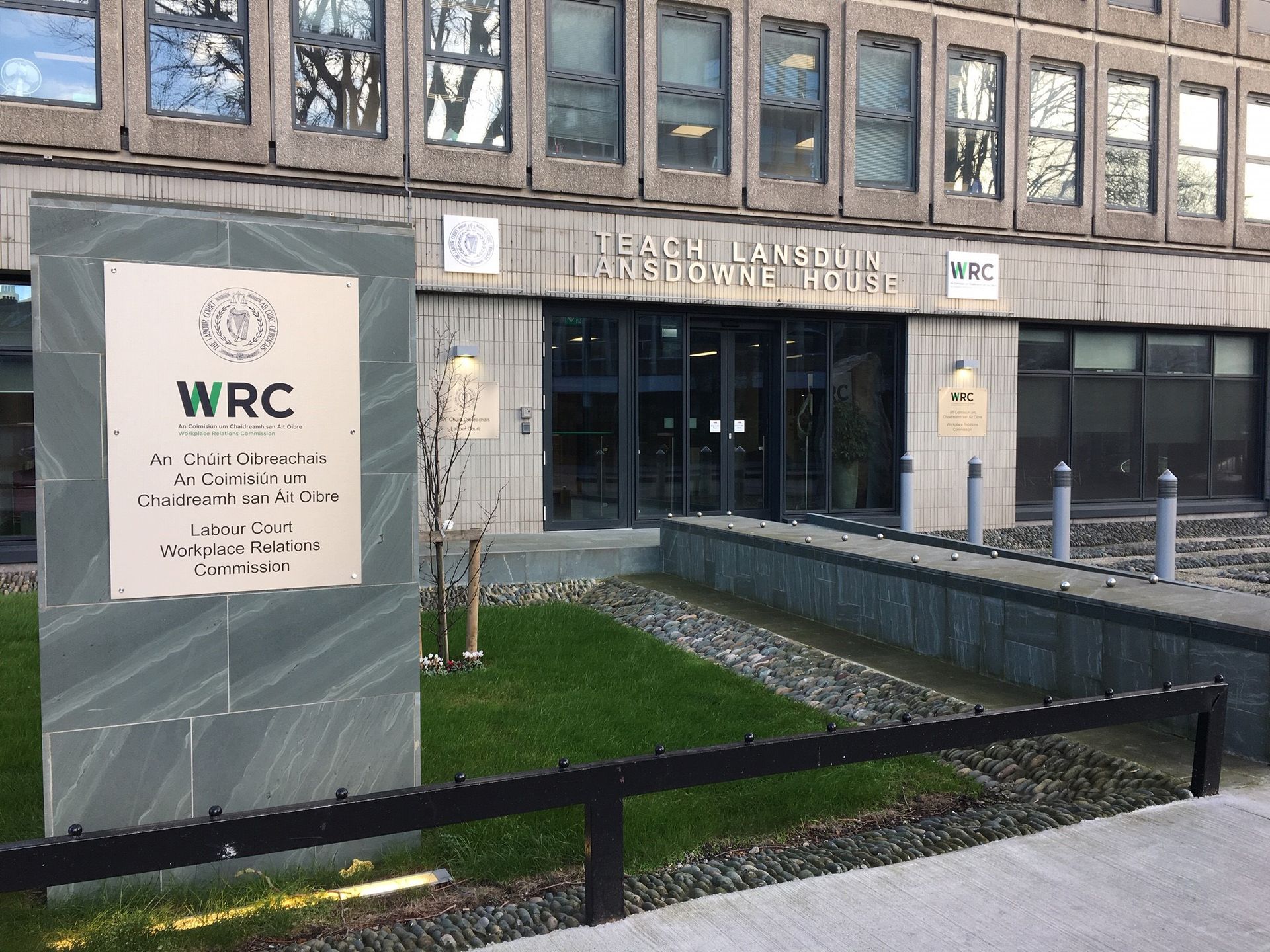
WRC Awards €40,000 for Indirect Discrimination in Recruitment Process
ADJ-00042837
A recent decision from the Workplace Relations Commission highlights the risks for employers when setting qualification requirements that may disproportionately exclude certain groups.
Background
The Complainant, who is deaf and a native user of Irish Sign Language (ISL), applied for a role as an Advisor Deaf/Hard of Hearing with the National Council for Special Education (NCSE).
Despite holding a PhD in Deaf Education and being a fluent ISL user, he was not shortlisted for an interview. The reason given was that he did not hold a formal qualification in ISL, which was listed as an essential requirement.
The Complainant challenged this decision internally, arguing that requiring a formal ISL qualification was discriminatory, as many deaf individuals use ISL as their first language but do not hold academic qualifications in it.
While the internal review upheld his complaint and accepted that his experience met the criteria, the recruitment process had already closed and no remedy was offered.
The Complaint
The Complainant brought a claim under the Employment Equality Acts, alleging indirect discrimination on the grounds of disability.
He argued that:
- The requirement for a formal ISL qualification disproportionately disadvantaged deaf applicants.
- His practical fluency and expertise should have been sufficient.
- The employer could have assessed competence through alternative means, such as an interview.
The Respondent maintained that the qualification requirement was necessary to ensure:
- Consistent standards.
- Teaching and advisory capability.
- Theoretical and pedagogical knowledge.
WRC Findings
The Adjudication Officer found in favour of the Complainant.
It was held that the requirement for a formal ISL qualification, while neutral on its face, placed deaf applicants at a particular disadvantage and therefore constituted indirect discrimination.
Importantly, the WRC found that:
- The Complainant had established a prima facie case of discrimination.
- The Respondent failed to objectively justify the requirement.
- The internal review had already accepted that the Complainant met the criteria.
- The failure to provide any remedy after upholding the internal complaint was a significant failing.
Redress
The WRC awarded €40,000 in compensation.
This exceeded the usual €13,000 cap applicable to non-employees, with reference to EU law requiring compensation to be effective, proportionate and dissuasive.
Key Takeaways for Employers
This case provides several important lessons:
- Qualification requirements must be carefully considered. Even well-intentioned criteria can be discriminatory if they disproportionately exclude certain groups.
- Experience and practical competence may be valid alternatives. Employers should consider whether less restrictive measures could achieve the same objective.
- Internal processes must lead to meaningful outcomes. Upholding a complaint without offering a remedy may expose organisations to further liability.
- Objective justification must be robust. It is not enough to show that a requirement is desirable, it must be necessary and proportionate.
This decision is a strong reminder that recruitment criteria must be inclusive and objectively justified. Employers should review job specifications carefully to ensure they do not unintentionally exclude qualified candidates, particularly where protected characteristics are concerned.
If you require assistance or an audit of your recruitment processes or require representation at the WRC please do not hesitate to contact MSS The HR People. Phone: 018870690, Email: info@mssthehrpeople.ie, visit our website