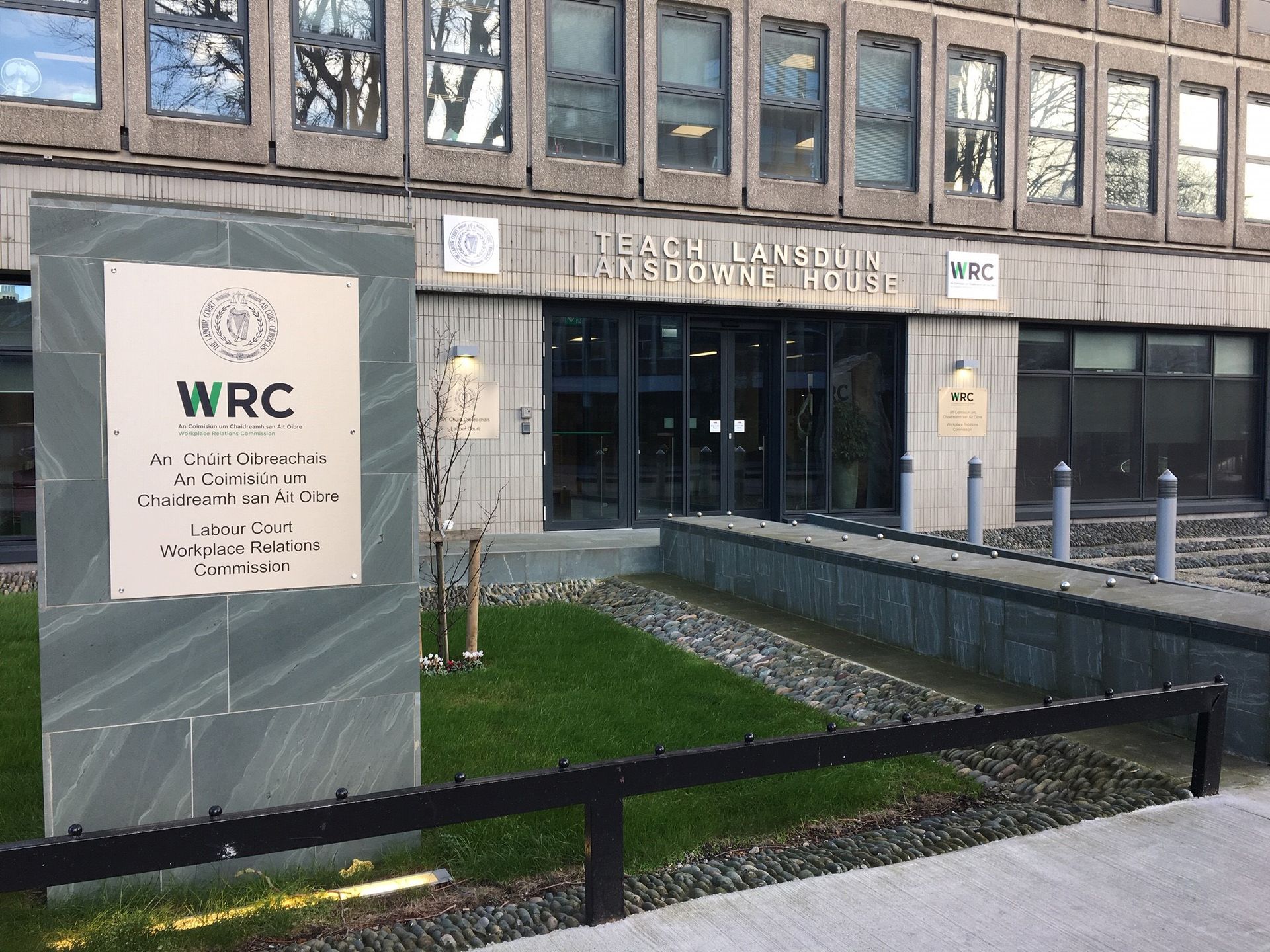
WRC Awards €3,700 Following Constructive Dismissal and Breaches of Working Time and Terms of Employment Legislation

April 9, 2026

ADJ-00057280


A recent decision of the Workplace Relations Commission (WRC) has resulted in an award of €3,700 to a former deli assistant who was found to have been constructively dismissed, while also succeeding in claims under the Organisation of Working Time Act and the Terms of Employment (Information) Act.


Background

The Complainant commenced employment in October 2023 as a deli assistant on a part-time basis, earning approximately €200 per week. While she initially worked full-time hours, she later transitioned to part-time work to accommodate her college studies.


Issues arose in October 2024 when management instructed the Complainant to take her breaks in a public seating area rather than her usual location. The purpose of this instruction was to ensure she remained available to assist during busy periods.


Shortly thereafter, the Complainant was issued with a formal written warning for allegedly failing to follow this instruction.


The Complainant raised concerns regarding both the fairness of the disciplinary process and her statutory entitlement to uninterrupted rest breaks. She submitted these concerns verbally and in writing, including a formal “right to reply” communication.


Despite this, the Respondent did not substantively engage with her concerns.


The Complainant subsequently experienced a significant reduction in her working hours and ultimately resigned in December 2024, claiming she had no reasonable alternative.


The Complaint

The Complainant brought three claims to the WRC:

  • Constructive dismissal under the Unfair Dismissals Acts.
  • Failure to provide updated terms of employment.
  • Breach of statutory rest break entitlements.


She argued that the disciplinary process was fundamentally flawed, that she was denied fair procedures, and that she was effectively required to remain available during her breaks in breach of legislation.


The Respondent’s Position

The Respondent denied all claims.


They argued that:


The Complainant resigned voluntarily. She failed to utilise the formal grievance procedure before resigning.  The disciplinary process was appropriate. Breaks were provided in line with statutory requirements. A valid contract of employment had been issued.


Findings of the WRC

Constructive Dismissal

The Adjudication Officer found significant procedural failings in the disciplinary process, those being, the Complainant:

  • Was not invited to a formal investigation meeting.
  • Was not given an opportunity to respond before the warning was issued.
  • Was denied fair process and natural justice.


In addition, the Respondent’s requirement that the Complainant remain available during her breaks was found to be contrary to the Organisation of Working Time Act, which requires that rest breaks be uninterrupted.


Importantly, the WRC noted that the Complainant raised her concerns on multiple occasions, both verbally and in writing. Despite this, the Respondent failed to meaningfully address or resolve the issues.


Taking these factors together, the Adjudication Officer found that the Respondent’s conduct undermined the relationship of trust and confidence to such an extent that the Complainant was entitled to resign.


The claim of constructive dismissal was therefore upheld.


Award: €3,000

Terms of Employment

The WRC found that the Respondent failed to provide an updated written statement of terms following the Complainant’s transition from full-time to part-time hours.


This was held to be a breach of the Terms of Employment (Information) Act.


Award: €200


Organisation of Working Time Act

The Adjudication Officer found that the Respondent’s practice of requiring the Complainant to remain available during her breaks was inconsistent with statutory rest break requirements.


Employees are entitled to uninterrupted rest periods, and any expectation to return to work during these breaks undermines that entitlement.


Award: €500


Key Takeaways for Employers

This case highlights several important considerations for employers:

  • Rest breaks must be uninterrupted: Employees cannot be required to remain “on call” during statutory breaks.
  • Disciplinary procedures must be fair: Employees must be informed of allegations, given an opportunity to respond, and allowed representation where appropriate.
  • Engage with employee complaints: Failure to address grievances can significantly increase legal risk.
  • Keep contracts up to date: Any material change to working hours or terms must be reflected in updated written documentation.
  • Constructive dismissal risk is real: Even where an employee resigns, failures in process and engagement can lead to successful claims.


If you require help navigating a disciplinary matter or require representation at the WRC please do not hesitate to contact MSS The HR People. Phone: 018870690, Email: info@mssthehrpeople.ie, visit our website



By Tara Daly April 9, 2026
WRC Reference: ADJ-00057077 / 11 th March 2026 A recent decision of the Workplace Relations Commission (WRC) has highlighted the importance of fair procedures, genuine consultation, and meaningful engagement in redundancy processes, particularly where senior executives are involved. Background The Complainant was employed by the Respondent for over 24 years, beginning in 2000. Over the course of her career, she progressed to the senior role of Managing Director, EMEA GLT, with a base salary of €275,000, alongside bonus and equity participation. In mid-2024, the Complainant’s role was significantly altered following an internal restructuring. She alleged that this amounted to an effective demotion, with key responsibilities removed without consultation or warning. Shortly afterwards, the situation escalated. The Complainant was placed on sick leave and raised a formal grievance regarding the changes to her role. That grievance was not upheld, and the appeal outcome confirmed the employer’s position. In October 2024, the Complainant was informed that her role was at risk of redundancy. A consultation process followed, during which she was placed on garden leave. Despite raising concerns and requesting further clarity around her role and terms, her employment was ultimately terminated by reason of redundancy in November 2024. The Complainant subsequently brought a claim for unfair dismissal. WRC Findings The Respondent conceded at the hearing that the dismissal was unfair. The Adjudication Officer noted that the Complainant had been employed in a very senior position for over two decades and had progressed through multiple promotions, ultimately holding a Managing Director role. It was accepted that significant changes had been made to her responsibilities prior to the redundancy process, which formed part of the broader context leading to the breakdown in the employment relationship. While a redundancy process was carried out, the key issue before the WRC was the fairness of the overall dismissal. Given the Respondent’s concession, the WRC found that the Complainant had been unfairly dismissed. Decision The WRC upheld the complaint of unfair dismissal and awarded the Complainant €142,984 in compensation A separate complaint relating to notice was rejected on the basis that statutory notice had already been included in the termination payment. Key Takeaways for Employers This decision highlights several important points for employers, particularly in the context of senior-level restructurings: Role changes must be handled carefully, particularly where they may amount to demotion in practice. Consultation must be genuine and meaningful, even at executive level. Grievances should be addressed thoroughly and fairly before moving to redundancy. Redundancy processes must be clearly separated from performance or role disputes. Senior employees are entitled to the same procedural protections as all employees. Even where restructuring is commercially justified, employers must ensure that process and communication are properly managed to avoid unfair dismissal findings. Conclusion This case serves as a reminder that long service and seniority do not reduce the employer’s obligations under employment law. Where role changes, grievances, and redundancy processes overlap, employers must take particular care to ensure fairness at every stage.  Failure to do so can result in significant compensation awards, as demonstrated by the €142,984 award made in this case.
April 9, 2026
ADJ-00042837 A recent decision from the Workplace Relations Commission highlights the risks for employers when setting qualification requirements that may disproportionately exclude certain groups. Background The Complainant, who is deaf and a native user of Irish Sign Language (ISL), applied for a role as an Advisor Deaf/Hard of Hearing with the National Council for Special Education (NCSE). Despite holding a PhD in Deaf Education and being a fluent ISL user, he was not shortlisted for an interview. The reason given was that he did not hold a formal qualification in ISL, which was listed as an essential requirement. The Complainant challenged this decision internally, arguing that requiring a formal ISL qualification was discriminatory, as many deaf individuals use ISL as their first language but do not hold academic qualifications in it. While the internal review upheld his complaint and accepted that his experience met the criteria, the recruitment process had already closed and no remedy was offered. The Complaint The Complainant brought a claim under the Employment Equality Acts, alleging indirect discrimination on the grounds of disability. He argued that: The requirement for a formal ISL qualification disproportionately disadvantaged deaf applicants. His practical fluency and expertise should have been sufficient. The employer could have assessed competence through alternative means, such as an interview. The Respondent maintained that the qualification requirement was necessary to ensure: Consistent standards. Teaching and advisory capability. Theoretical and pedagogical knowledge. WRC Findings The Adjudication Officer found in favour of the Complainant. It was held that the requirement for a formal ISL qualification, while neutral on its face, placed deaf applicants at a particular disadvantage and therefore constituted indirect discrimination. Importantly, the WRC found that: The Complainant had established a prima facie case of discrimination. The Respondent failed to objectively justify the requirement. The internal review had already accepted that the Complainant met the criteria. The failure to provide any remedy after upholding the internal complaint was a significant failing. Redress The WRC awarded €40,000 in compensation. This exceeded the usual €13,000 cap applicable to non-employees, with reference to EU law requiring compensation to be effective, proportionate and dissuasive. Key Takeaways for Employers This case provides several important lessons: Qualification requirements must be carefully considered. Even well-intentioned criteria can be discriminatory if they disproportionately exclude certain groups. Experience and practical competence may be valid alternatives. Employers should consider whether less restrictive measures could achieve the same objective. Internal processes must lead to meaningful outcomes. Upholding a complaint without offering a remedy may expose organisations to further liability. Objective justification must be robust. It is not enough to show that a requirement is desirable, it must be necessary and proportionate. This decision is a strong reminder that recruitment criteria must be inclusive and objectively justified. Employers should review job specifications carefully to ensure they do not unintentionally exclude qualified candidates, particularly where protected characteristics are concerned. If you require assistance or an audit of your recruitment processes or require representation at the WRC please do not hesitate to contact MSS The HR People. Phone: 018870690, Email: info@mssthehrpeople.ie , visit our website
By Tara Daly April 9, 2026
WRC Reference: ADJ-00052352 / 9 th March 2026 A recent decision of the Workplace Relations Commission (WRC), Nancy Doherty v Figary Water Sports Development Company Ltd highlights the risks for employers where changes to working arrangements impact an employee with a disability. Background The Complainant, Ms Nancy Doherty, was employed as a Marina Manager with the Respondent company since 2002. During her employment, Ms Doherty experienced a number of serious health issues, including multiple cancer diagnoses, and was undergoing ongoing treatment. She alleged that, following her return to work, her working arrangements were significantly altered. Her hours were reduced from full-time to two days per week and, ultimately, she was left with no working hours at all. She further claimed that she was effectively excluded from the workplace in December 2023. The Respondent denied that any discrimination had occurred, maintaining that any changes to working arrangements were either agreed or unrelated to the Complainant’s disability. A preliminary argument was also raised that elements of the claim fell outside the statutory time limits. WRC Findings The Adjudication Officer was satisfied that the key events in December 2023, when the Complainant’s remaining working days were removed and she was told not to attend work, brought the complaint within the relevant time limits. It was accepted that the Complainant had a disability. The focus therefore turned to whether she was treated less favourably than a comparable employee. The Complainant identified another individual, referred to as Ms B, who continued working. While the Respondent disputed her status, the WRC accepted that she carried out work and was paid, and therefore was a valid comparator. On that basis, the Adjudication Officer found that a prima facie case of discrimination had been established, shifting the burden of proof to the Respondent. However, the Respondent failed to rebut this. The WRC accepted that the Complainant was told not to attend work in December 2023 and noted that no steps were taken to clarify or reverse that position. The Adjudication Officer emphasised that it is the employer’s responsibility to address such situations. The absence of formal procedures, including a grievance process, was also a factor. In the absence of such structures, the risk of unresolved issues rests with the employer. While there was conflicting evidence regarding the earlier reduction in hours, the WRC found that this had been accepted at the time. The finding of discrimination instead related to the removal of all working hours and the Complainant’s exclusion from the workplace. Decision The WRC found in favour of the Complainant and awarded: €20,000 compensation for discrimination under the Employment Equality Acts. €300 compensation for failure to provide written terms and conditions of employment. The level of compensation was reduced to reflect the fact that the Respondent had continued to make payments to the Complainant for a period following the end of her employment. Key Takeaways for Employers This case highlights several important lessons: Exercise caution when changing working arrangements for employees with disabilities. Ensure clear and consistent communication around any workplace decisions. Act promptly to resolve misunderstandings, inaction can create legal exposure. Implement and maintain proper workplace procedures, including grievance policies. Comply with core employment law obligations, including providing written terms of employment. Even in the absence of intentional discrimination, poor communication and a lack of structure can lead to significant liability. If you require support navigating changes to terms and conditions or reasonable accommodations contact MSS The HR People at: info@mssthehrpeople.ie , Ph 018870690 or visit our website for further guidance.
By Tara Daly April 9, 2026
ADJ-00045339 A recent decision involving Dublin Business School highlights how compensation awards can significantly increase on appeal, with the Labour Court more than doubling a Workplace Relations Commission (WRC) award in an unfair dismissal case. Background The employee, a lecturer, was dismissed in February 2023 following a disciplinary process which found him guilty of gross misconduct. The issue arose after he accessed his work email while visiting Iran, a country the employer had designated as “prohibited” for system access. The lecturer had travelled abroad to attend a family funeral. Despite being instructed not to access the system, the employer determined that doing so constituted a serious breach of policy and proceeded to dismiss him. Importantly, the employer later conceded, both at the WRC and on appeal, that the dismissal was unfair. WRC Decision: €53,000 Award At first instance, the WRC focused solely on redress, as liability was no longer in dispute. The Adjudication Officer considered: The complainant’s financial loss, including his earnings (which averaged approximately €91,000 due to additional work beyond his base salary). His efforts to mitigate loss, including job applications and periods of part-time work. Personal circumstances affecting his ability to secure new employment, including bereavement and family difficulties. The impact of the dismissal on his reputation within a relatively small professional community. While acknowledging the significant impact of the dismissal, the WRC found that the employee’s mitigation efforts were not fully sufficient. Taking all factors into account, compensation of €53,000 was awarded. Labour Court Appeal: Award Increased to €104,000 The lecturer appealed the adequacy of the compensation to the Labour Court. On appeal, the Court reassessed: The scale and duration of financial loss. The employee’s evidence that he had made over 100 job applications. The reputational damage arising from the dismissal. The fact that he had only secured lower-paid, temporary lecturing roles since his dismissal. The Court also noted: No evidence was presented by the employer to justify the dismissal. No persuasive evidence that the employee contributed to his dismissal. While mitigation efforts were made, they were not considered fully comprehensive. Based on an annual income of approximately €91,000, the Court noted that the statutory maximum award could exceed €180,000. Balancing all factors, the Labour Court concluded that a €104,000 award was “just and equitable”, effectively doubling the WRC award. Key Takeaways for Employers This case serves as an important reminder of several key principles: 1. Even admitted unfair dismissals can carry escalating financial risk. An initial award may not be the final exposure, appeals can significantly increase compensation. 2. Gross misconduct thresholds must be carefully assessed. Dismissal for a single act, particularly in unusual or sensitive personal circumstances, may not always be proportionate. 3. Mitigation arguments matter, but are not decisive. While employees must make reasonable efforts to find work, imperfect mitigation will not eliminate employer liability. 4. Reputation damage can influence compensation. Particularly in niche sectors, dismissal can have longer-term career consequences which tribunals will consider. 5. Evidence at the appeal stage is critical. The absence of employer evidence at Labour Court level weakened the respondent’s position significantly. If you require help navigating a disciplinary matter or require representation at the WRC or Labour Court please do not hesitate to contact MSS The HR People. Phone: 018870690, Email: info@mssthehrpeople.ie , visit our website
By Tara Daly April 9, 2026
WRC Reference: ADJ-00060438 / 12 th March 2026 A recent decision of the Workplace Relations Commission (WRC) highlights the risks for employers in how they respond when an employee raises a potential mental health issue in the workplace. Background The Complainant was employed as an Assistant Manager in a restaurant from December 2023. She alleged that she was subjected to discrimination, harassment, victimisation and ultimately a discriminatory dismissal on the grounds of disability. In particular, she claimed that after disclosing that she was experiencing depression, her treatment at work deteriorated rapidly, ultimately leading to the end of her employment. The Respondent denied any discrimination, maintaining that they were not aware of any disability and that the employment relationship broke down due to performance concerns and the Complainant’s attitude. WRC Findings The Adjudication Officer examined the sequence of events leading to the termination of employment, with particular focus on a meeting which took place at the end of April 2025. It was accepted that prior to this point, the Complainant had been a reliable and valued employee. However, concerns arose regarding her performance in the weeks leading up to this meeting. During this discussion, the Complainant raised issues regarding her mental health. While there was conflicting evidence as to the extent of the disclosure, the Adjudication Officer found, on balance, that the Complainant had informed her employer that she was experiencing depression. The WRC was satisfied that this disclosure was not meaningfully engaged with by the Respondent. Instead, within a matter of days, the Complainant was told that the role may not suit her and that she should consider alternative employment. The Adjudication Officer found that the situation escalated quickly following this disclosure. The Complainant was subjected to criticism and negative treatment, was removed from the roster, and ultimately ceased attending work. On this basis, the WRC found that the Complainant had established a prima facie case of discrimination, which the Respondent failed to rebut. The Adjudication Officer concluded that the Complainant had been constructively dismissed in circumstances amounting to discrimination, and had also been subjected to victimisation. Decision The WRC found the complaints to be well founded and awarded:  €2,500 compensation for discriminatory dismissal. €2,500 compensation for victimisation. Key Takeaways for Employers This case highlights a number of important considerations for employers: Take disclosures of mental health issues seriously, even where they are informal or lack detailed medical evidence. Engage appropriately and sensitively with employees who raise potential health concerns. Avoid reacting negatively or prematurely following such disclosures. Ensure that performance management processes remain fair and objective. Be aware that a rapid deterioration in treatment following a disclosure may give rise to an inference of discrimination. While the level of compensation in this case was relatively modest, the decision underscores the legal risks where employers fail to appropriately respond to potential disabilities in the workplace. If you need help navigating medical or disability disclosures contact MSS The HR People at: info@mssthehrpeople.ie , Ph 018870690 or visit our website for further guidance.
By Tara Daly April 9, 2026
WRC Reference: ADJ-00057560 / 11 th March 2026 A recent decision of the Workplace Relations Commission (WRC) highlights the importance of fair procedures, independent decision-making, and the risks for employers where disciplinary processes become compromised. Background The Complainant, a Deli Manager, was dismissed following allegations that she had given false evidence during a previous WRC hearing. The employer relied on this allegation as gross misconduct and proceeded to investigate and terminate her employment. The employee denied the allegations and argued that the decision to dismiss her was unfair, both in terms of process and outcome. WRC Findings The WRC found that the disciplinary process was significantly flawed from the outset. The investigation lacked independence, with concerns raised regarding the involvement of individuals closely connected to the business. This undermined the fairness and objectivity of the process. The Adjudication Officer also noted that the employee was not provided with full details of the allegations in advance and was not given a proper opportunity to respond during the process. A key issue in the case was that the outcome of the disciplinary process appeared to have been decided in advance. The dismissal letter had effectively been prepared before the process had concluded, indicating that the decision was predetermined. The WRC also criticised the absence of a meaningful appeal process following the dismissal. Importantly, the Adjudication Officer considered that the dismissal arose in circumstances where the employee had previously given evidence at a WRC hearing. Employees are legally protected when participating in such proceedings, and this was a relevant factor in the overall assessment. The WRC concluded that the process fell short of the standards required under fair procedures and natural justice. Decision The WRC upheld the complaint of unfair dismissal and awarded the Complainant: €40,000 compensation Reinstatement was not considered appropriate given the breakdown in trust between the parties. Key Takeaways for Employers This case reinforces several important lessons for employers: Disciplinary investigations must be independent and properly structured. Employees must be given clear notice of allegations and a fair chance to respond. Outcomes should never be decided in advance of a hearing. A genuine appeal process is essential. Employees are protected when giving evidence in legal proceedings. Even where an employer believes misconduct has occurred, failing to follow fair procedures can render a dismissal both procedurally and substantively unfair. This decision is a strong reminder that fair process is not optional. Where investigations are rushed, biased, or predetermined, employers expose themselves to significant legal and financial risk. In this case, those failures resulted in a €40,000 award for unfair dismissal. If you need help navigating an investigation or disciplinary process contact MSS The HR People at: info@mssthehrpeople.ie , Ph 018870690 or visit our website for further guidance.
WRC Rejects Whistleblowing Penalisation Claim
By Tara Daly March 4, 2026
The WRC rejected a claim brought under the Protected Disclosures legislation by an employee who alleged that he had been penalised after raising workplace concerns.
WRC Upholds Dismissal in Sick Pay Dispute
By Tara Daly March 4, 2026
The WRC rejected a claim taken by an employee who argued that his dismissal, following a prolonged period of absence due to illness, was unfair.
WRC Awards €21,000 Following Pregnancy Related Dismissal
By Tara Daly March 4, 2026
The WRC awarded €21,000 to an employee who was dismissed shortly after informing her employer that she was pregnant.
WRC Awards €17,000 in Unpaid Wages to  Dentist After Illegal Wage Deduction
By Tara Daly March 4, 2026
The WRC awarded €17,000 to a dentist who was not paid wages, commission and fees owed by her employer, Capital Care Moate Ltd, under the Payment of Wages Act 1991.