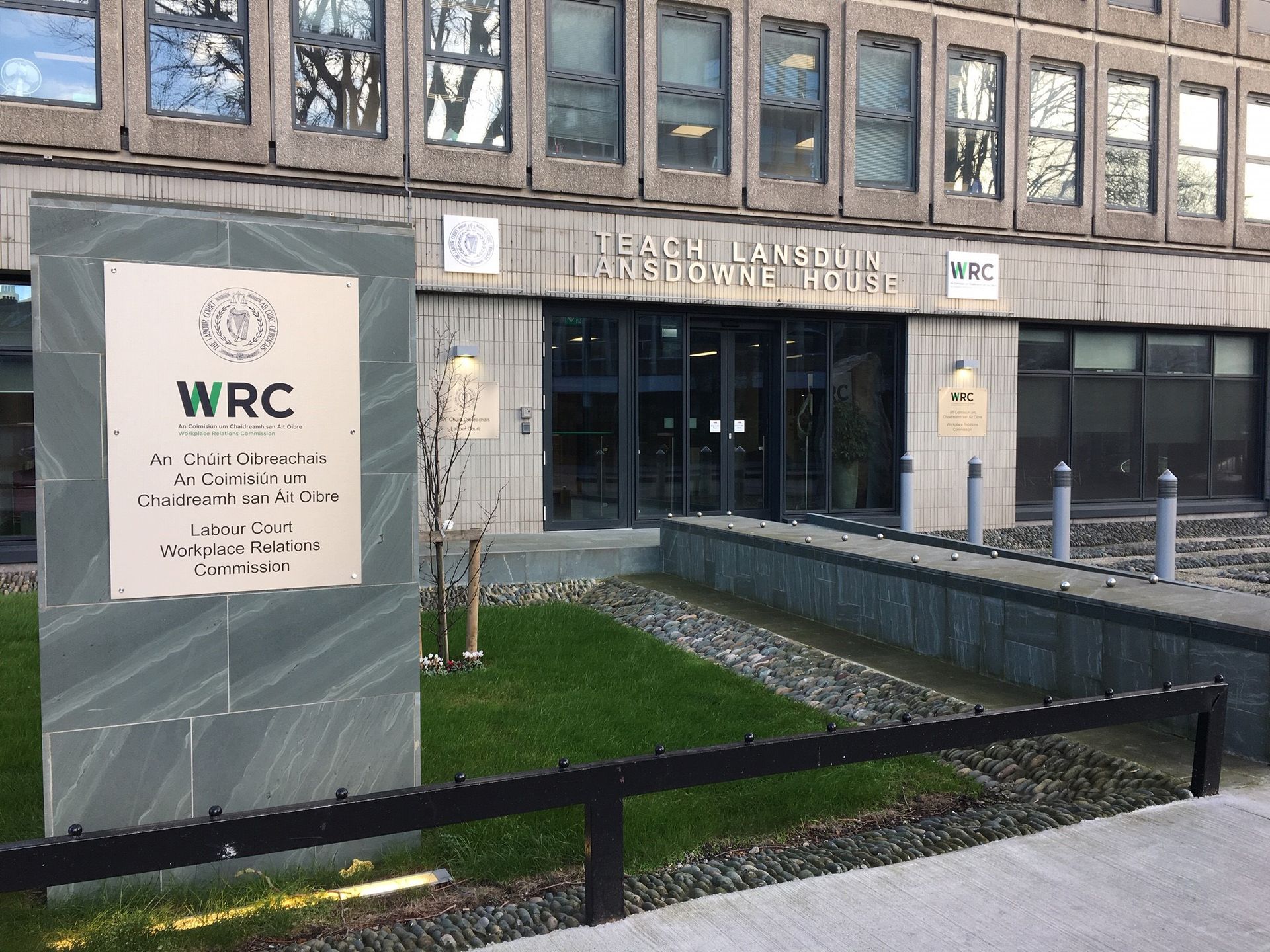
Psychological Illness Now the Leading Cause of Income Protection Claims in Ireland

May 7, 2026

Recent reporting by The Irish Times highlights a significant shift in workplace health trends, with psychological illness now the most common cause of income protection claims in Ireland.


Drawing on data from Aviva Life and Pensions Ireland, the figures show a 32% increase in income protection claims year-on-year, with psychological illness now accounting for 26% of all claims. The average claim duration stands at approximately 7.8 years, underlining the long-term nature of these cases.


Importantly, while cancer and cardiac conditions remain the leading causes of life insurance and specified illness claims, psychological illness is now the primary driver of long-term absence from work.


What This Means for Employers


Psychological illness is no longer a secondary or emerging issue. It is now the leading cause of long-term work incapacity from an income protection perspective, with direct implications for absence levels, workforce planning, and operational continuity.


These are not short-term absences. The reported average duration of 7.8 years highlights the scale of impact.

In practice, this means:


  • Prolonged employee absence
  • Increased pressure on remaining teams
  • Complex case management over extended periods


These situations require significantly more time, resource, and judgement than standard sick leave management.


The risk sits inside the organisation


While external factors often play a role, in practice we frequently see a combination of personal and work-related factors contributing to these situations.


Common workplace elements include:

  • Sustained high workloads
  • Poor role clarity
  • Limited management capability in handling sensitive issues
  • Lack of early intervention


More often than not, these cases involve an interplay between workplace and non-workplace factors, rather than a single clear cause.


This creates a real minefield for employers to navigate, particularly where there is uncertainty around:

  • what is driving the absence
  • what the organisation can reasonably address
  • how far responsibility extends


However, the presence of external factors does not remove the need to identify and address any work-related contributors at an early stage. Where this does not happen, issues can become compounded over time, and by the point a formal absence arises, the underlying factors are often already well embedded.


Early clarity on these factors is often the difference between a short-term issue and a long-term absence.


Where Employers Should Focus


The starting point is early intervention. Regular, meaningful check-ins and clear escalation pathways allow issues to be identified before they develop into more complex situations.


Manager capability is equally critical. Line managers are typically the first point of contact, yet are often the least equipped to manage these conversations. Supporting managers to recognise early warning signs and handle sensitive discussions appropriately is a key control measure.


Structured supports also play an important role, particularly in more complex or prolonged cases. This includes:

  • Employee Assistance Programmes (EAPs)
  • Occupational health referrals
  • Phased return-to-work arrangements


Finally, employers should take a step back and assess the overall working environment. Workload distribution, expectations around availability, and boundaries between work and personal time all contribute to whether performance can be sustained in the longer term.


Final Thought


The data highlighted by The Irish Times reflects a broader shift that employers cannot ignore.


Psychological health is no longer solely a wellbeing initiative. It is now a core business risk with direct operational and financial implications.


Employers who respond proactively will be better positioned to:

  • reduce long-term absence
  • retain experienced employees
  • mitigate future risk


Those who do not may see these issues surface later in more complex forms, including grievances, long-term absence cases, and potential legal exposure.


Need Support?


If you are seeing an increase in stress-related absence or are unsure how to manage a current situation, we can help.


At MSS The HR People, we support clients with absence management, complex employee relations issues, and practical, compliant HR advice. Feel free to get in touch by phone on 01 8870 690 or email.



Amy Vickers


WRC awards €15,000 after employee kept on “specific purpose” contract for 10 years
By Amy Vickers May 7, 2026
A recent WRC decision is a very important reminder to employers that long running “specific purpose” and fixed term arrangements can create significant risk
Workplace Bullying, Harassment and Sexual Harassment Claims Are Rising
By Amy Vickers May 7, 2026
Increase in complaints relating to bullying, harassment, and sexual harassment and the complexity and escalation of these cases.
Supporting Employees Through Pregnancy Loss
By Amy Vickers May 7, 2026
Pregnancy loss is a deeply personal experience. For employers, these situations can be equally challenging because of the uncertainty around it.
By Tara Daly May 5, 2026
Delays in employment permit applications are a frequent frustration for employers. Many assume the issue lies with processing times or administrative backlogs. In reality, the most common cause of delay is something else entirely. The real issue: misalignment The number one reason applications are delayed is misalignment with the eligibility criteria. This can include: • Roles that are not clearly defined • Job descriptions that do not match the required skill level • Weak or generic supporting information On the surface, an application may appear complete. However, if it does not clearly demonstrate eligibility, it is likely to encounter delays or queries. Why this happens Employers often approach the process as an administrative task. In practice, each application is assessed on its merits, and clarity is critical. How to avoid delays To reduce the risk of delay: • Ensure the role clearly meets eligibility requirements • Align job descriptions with the actual duties and level of the role • Provide strong, specific supporting information It is also important to review the application from the perspective of the decision-maker. If the application leaves room for doubt, it is far more likely to be delayed while clarification is sought. Key takeaway for employers Employment permits are not delayed because of missing forms. They are delayed because the application does not clearly meet the criteria. Understanding how your application will be assessed is essential, particularly where timelines are already under pressure and the business needs certainty around a key hire. If you’re planning an overseas hire or facing delays, we’re happy to talk it through. info@mssthehrpeople.ie | 01 887 0690
By Tara Daly April 28, 2026
One of the most challenging scenarios for employers is progressing an employment permit application that appears complete, but carries a high risk of refusal. In many cases, this risk only becomes apparent once a decision has been issued. We were recently engaged by a client in the healthcare support sector who had already begun preparing an application for a General Employment Permit for a specialist role. The situation The employer had: • Identified a suitable overseas candidate • Undertaken initial steps in the application process • Prepared the necessary documentation However, they sought a review before submission due to uncertainty around eligibility. What we identified On review, it became clear that the application, as drafted, was unlikely to succeed. The risks were not immediately obvious but included: • A job description that did not clearly demonstrate the level of skill required • Duties that overlapped with roles not typically eligible for a permit • Insufficient detail in the business case supporting the hire From experience, these types of issues frequently result in refusals, particularly where roles sit close to the margins of eligibility. Why this matters A refusal does not just mean a rejected application. It often results in: • Restarting the process from the beginning • Additional recruitment delays • Potential loss of the candidate In sectors already experiencing staffing pressures, this can have a significant operational impact. Our approach We worked with the employer to: • Refine and clarify the role profile to accurately reflect its responsibilities and requirements • Distinguish the role from non-eligible positions • Strengthen the supporting documentation to clearly demonstrate eligibility and business need. This required a detailed understanding of how similar roles are assessed in practice. The outcome Following revision, the application was submitted and approved on first submission. The employer avoided: • A likely refusal • Delays in onboarding • Disruption to service delivery Key takeaway for employers Applications are not assessed solely on whether documentation is present. They are assessed on whether the role, as presented, clearly meets the criteria. Where roles are borderline or nuanced, early intervention can significantly reduce the risk of refusal. If you’re planning an overseas hire or facing delays, we’re happy to talk it through. info@mssthehrpeople.ie | 01 887 0690
Securing a Critical Skills Employment Permit: When Timelines Start to Slip
By Tara Daly April 23, 2026
Irish employers are increasingly relying on international hiring to fill key roles, particularly in sectors experiencing acute skills shortages.
April 9, 2026
WRC Reference: ADJ-00057077 / 11 th March 2026 A recent decision of the Workplace Relations Commission (WRC) has highlighted the importance of fair procedures, genuine consultation, and meaningful engagement in redundancy processes, particularly where senior executives are involved. Background The Complainant was employed by the Respondent for over 24 years, beginning in 2000. Over the course of her career, she progressed to the senior role of Managing Director, EMEA GLT, with a base salary of €275,000, alongside bonus and equity participation. In mid-2024, the Complainant’s role was significantly altered following an internal restructuring. She alleged that this amounted to an effective demotion, with key responsibilities removed without consultation or warning. Shortly afterwards, the situation escalated. The Complainant was placed on sick leave and raised a formal grievance regarding the changes to her role. That grievance was not upheld, and the appeal outcome confirmed the employer’s position. In October 2024, the Complainant was informed that her role was at risk of redundancy. A consultation process followed, during which she was placed on garden leave. Despite raising concerns and requesting further clarity around her role and terms, her employment was ultimately terminated by reason of redundancy in November 2024. The Complainant subsequently brought a claim for unfair dismissal. WRC Findings The Respondent conceded at the hearing that the dismissal was unfair. The Adjudication Officer noted that the Complainant had been employed in a very senior position for over two decades and had progressed through multiple promotions, ultimately holding a Managing Director role. It was accepted that significant changes had been made to her responsibilities prior to the redundancy process, which formed part of the broader context leading to the breakdown in the employment relationship. While a redundancy process was carried out, the key issue before the WRC was the fairness of the overall dismissal. Given the Respondent’s concession, the WRC found that the Complainant had been unfairly dismissed. Decision The WRC upheld the complaint of unfair dismissal and awarded the Complainant €142,984 in compensation A separate complaint relating to notice was rejected on the basis that statutory notice had already been included in the termination payment. Key Takeaways for Employers This decision highlights several important points for employers, particularly in the context of senior-level restructurings: Role changes must be handled carefully, particularly where they may amount to demotion in practice. Consultation must be genuine and meaningful, even at executive level. Grievances should be addressed thoroughly and fairly before moving to redundancy. Redundancy processes must be clearly separated from performance or role disputes. Senior employees are entitled to the same procedural protections as all employees. Even where restructuring is commercially justified, employers must ensure that process and communication are properly managed to avoid unfair dismissal findings. Conclusion This case serves as a reminder that long service and seniority do not reduce the employer’s obligations under employment law. Where role changes, grievances, and redundancy processes overlap, employers must take particular care to ensure fairness at every stage. Failure to do so can result in significant compensation awards, as demonstrated by the €142,984 award made in this case. Tara Daly
April 9, 2026
ADJ-00042837 A recent decision from the Workplace Relations Commission highlights the risks for employers when setting qualification requirements that may disproportionately exclude certain groups. Background The Complainant, who is deaf and a native user of Irish Sign Language (ISL), applied for a role as an Advisor Deaf/Hard of Hearing with the National Council for Special Education (NCSE). Despite holding a PhD in Deaf Education and being a fluent ISL user, he was not shortlisted for an interview. The reason given was that he did not hold a formal qualification in ISL, which was listed as an essential requirement. The Complainant challenged this decision internally, arguing that requiring a formal ISL qualification was discriminatory, as many deaf individuals use ISL as their first language but do not hold academic qualifications in it. While the internal review upheld his complaint and accepted that his experience met the criteria, the recruitment process had already closed and no remedy was offered. The Complaint The Complainant brought a claim under the Employment Equality Acts, alleging indirect discrimination on the grounds of disability. He argued that: The requirement for a formal ISL qualification disproportionately disadvantaged deaf applicants. His practical fluency and expertise should have been sufficient. The employer could have assessed competence through alternative means, such as an interview. The Respondent maintained that the qualification requirement was necessary to ensure: Consistent standards. Teaching and advisory capability. Theoretical and pedagogical knowledge. WRC Findings The Adjudication Officer found in favour of the Complainant. It was held that the requirement for a formal ISL qualification, while neutral on its face, placed deaf applicants at a particular disadvantage and therefore constituted indirect discrimination. Importantly, the WRC found that: The Complainant had established a prima facie case of discrimination. The Respondent failed to objectively justify the requirement. The internal review had already accepted that the Complainant met the criteria. The failure to provide any remedy after upholding the internal complaint was a significant failing. Redress The WRC awarded €40,000 in compensation. This exceeded the usual €13,000 cap applicable to non-employees, with reference to EU law requiring compensation to be effective, proportionate and dissuasive. Key Takeaways for Employers This case provides several important lessons: Qualification requirements must be carefully considered. Even well-intentioned criteria can be discriminatory if they disproportionately exclude certain groups. Experience and practical competence may be valid alternatives. Employers should consider whether less restrictive measures could achieve the same objective. Internal processes must lead to meaningful outcomes. Upholding a complaint without offering a remedy may expose organisations to further liability. Objective justification must be robust. It is not enough to show that a requirement is desirable, it must be necessary and proportionate. This decision is a strong reminder that recruitment criteria must be inclusive and objectively justified. Employers should review job specifications carefully to ensure they do not unintentionally exclude qualified candidates, particularly where protected characteristics are concerned. If you require assistance or an audit of your recruitment processes or require representation at the WRC please do not hesitate to contact MSS The HR People. Phone: 018870690, Email: info@mssthehrpeople.ie , visit our website
By Tara Daly April 9, 2026
WRC Reference: ADJ-00052352 / 9 th March 2026 A recent decision of the Workplace Relations Commission (WRC), Nancy Doherty v Figary Water Sports Development Company Ltd highlights the risks for employers where changes to working arrangements impact an employee with a disability. Background The Complainant, Ms Nancy Doherty, was employed as a Marina Manager with the Respondent company since 2002. During her employment, Ms Doherty experienced a number of serious health issues, including multiple cancer diagnoses, and was undergoing ongoing treatment. She alleged that, following her return to work, her working arrangements were significantly altered. Her hours were reduced from full-time to two days per week and, ultimately, she was left with no working hours at all. She further claimed that she was effectively excluded from the workplace in December 2023. The Respondent denied that any discrimination had occurred, maintaining that any changes to working arrangements were either agreed or unrelated to the Complainant’s disability. A preliminary argument was also raised that elements of the claim fell outside the statutory time limits. WRC Findings The Adjudication Officer was satisfied that the key events in December 2023, when the Complainant’s remaining working days were removed and she was told not to attend work, brought the complaint within the relevant time limits. It was accepted that the Complainant had a disability. The focus therefore turned to whether she was treated less favourably than a comparable employee. The Complainant identified another individual, referred to as Ms B, who continued working. While the Respondent disputed her status, the WRC accepted that she carried out work and was paid, and therefore was a valid comparator. On that basis, the Adjudication Officer found that a prima facie case of discrimination had been established, shifting the burden of proof to the Respondent. However, the Respondent failed to rebut this. The WRC accepted that the Complainant was told not to attend work in December 2023 and noted that no steps were taken to clarify or reverse that position. The Adjudication Officer emphasised that it is the employer’s responsibility to address such situations. The absence of formal procedures, including a grievance process, was also a factor. In the absence of such structures, the risk of unresolved issues rests with the employer. While there was conflicting evidence regarding the earlier reduction in hours, the WRC found that this had been accepted at the time. The finding of discrimination instead related to the removal of all working hours and the Complainant’s exclusion from the workplace. Decision The WRC found in favour of the Complainant and awarded: €20,000 compensation for discrimination under the Employment Equality Acts. €300 compensation for failure to provide written terms and conditions of employment. The level of compensation was reduced to reflect the fact that the Respondent had continued to make payments to the Complainant for a period following the end of her employment. Key Takeaways for Employers This case highlights several important lessons: Exercise caution when changing working arrangements for employees with disabilities. Ensure clear and consistent communication around any workplace decisions. Act promptly to resolve misunderstandings, inaction can create legal exposure. Implement and maintain proper workplace procedures, including grievance policies. Comply with core employment law obligations, including providing written terms of employment. Even in the absence of intentional discrimination, poor communication and a lack of structure can lead to significant liability. If you require support navigating changes to terms and conditions or reasonable accommodations contact MSS The HR People at: info@mssthehrpeople.ie , Ph 018870690 or visit our website for further guidance.
By Tara Daly April 9, 2026
ADJ-00057280 A recent decision of the Workplace Relations Commission (WRC) has resulted in an award of €3,700 to a former deli assistant who was found to have been constructively dismissed, while also succeeding in claims under the Organisation of Working Time Act and the Terms of Employment (Information) Act. Background The Complainant commenced employment in October 2023 as a deli assistant on a part-time basis, earning approximately €200 per week. While she initially worked full-time hours, she later transitioned to part-time work to accommodate her college studies. Issues arose in October 2024 when management instructed the Complainant to take her breaks in a public seating area rather than her usual location. The purpose of this instruction was to ensure she remained available to assist during busy periods. Shortly thereafter, the Complainant was issued with a formal written warning for allegedly failing to follow this instruction. The Complainant raised concerns regarding both the fairness of the disciplinary process and her statutory entitlement to uninterrupted rest breaks. She submitted these concerns verbally and in writing, including a formal “right to reply” communication. Despite this, the Respondent did not substantively engage with her concerns. The Complainant subsequently experienced a significant reduction in her working hours and ultimately resigned in December 2024, claiming she had no reasonable alternative. The Complaint The Complainant brought three claims to the WRC: Constructive dismissal under the Unfair Dismissals Acts. Failure to provide updated terms of employment. Breach of statutory rest break entitlements. She argued that the disciplinary process was fundamentally flawed, that she was denied fair procedures, and that she was effectively required to remain available during her breaks in breach of legislation. The Respondent’s Position The Respondent denied all claims. They argued that: The Complainant resigned voluntarily. She failed to utilise the formal grievance procedure before resigning. The disciplinary process was appropriate. Breaks were provided in line with statutory requirements. A valid contract of employment had been issued. Findings of the WRC Constructive Dismissal The Adjudication Officer found significant procedural failings in the disciplinary process, those being, the Complainant: Was not invited to a formal investigation meeting. Was not given an opportunity to respond before the warning was issued. Was denied fair process and natural justice. In addition, the Respondent’s requirement that the Complainant remain available during her breaks was found to be contrary to the Organisation of Working Time Act, which requires that rest breaks be uninterrupted. Importantly, the WRC noted that the Complainant raised her concerns on multiple occasions, both verbally and in writing. Despite this, the Respondent failed to meaningfully address or resolve the issues. Taking these factors together, the Adjudication Officer found that the Respondent’s conduct undermined the relationship of trust and confidence to such an extent that the Complainant was entitled to resign. The claim of constructive dismissal was therefore upheld. Award: €3,000 Terms of Employment The WRC found that the Respondent failed to provide an updated written statement of terms following the Complainant’s transition from full-time to part-time hours. This was held to be a breach of the Terms of Employment (Information) Act. Award: €200 Organisation of Working Time Act The Adjudication Officer found that the Respondent’s practice of requiring the Complainant to remain available during her breaks was inconsistent with statutory rest break requirements. Employees are entitled to uninterrupted rest periods, and any expectation to return to work during these breaks undermines that entitlement. Award: €500 Key Takeaways for Employers This case highlights several important considerations for employers: Rest breaks must be uninterrupted: Employees cannot be required to remain “on call” during statutory breaks. Disciplinary procedures must be fair: Employees must be informed of allegations, given an opportunity to respond, and allowed representation where appropriate. Engage with employee complaints: Failure to address grievances can significantly increase legal risk. Keep contracts up to date: Any material change to working hours or terms must be reflected in updated written documentation. Constructive dismissal risk is real: Even where an employee resigns, failures in process and engagement can lead to successful claims. If you require help navigating a disciplinary matter or require representation at the WRC please do not hesitate to contact MSS The HR People. Phone: 018870690, Email: info@mssthehrpeople.ie , visit our website