Interesting and Notable Cases of 2022

February 13, 2023

Interesting and Notable Cases of 2022


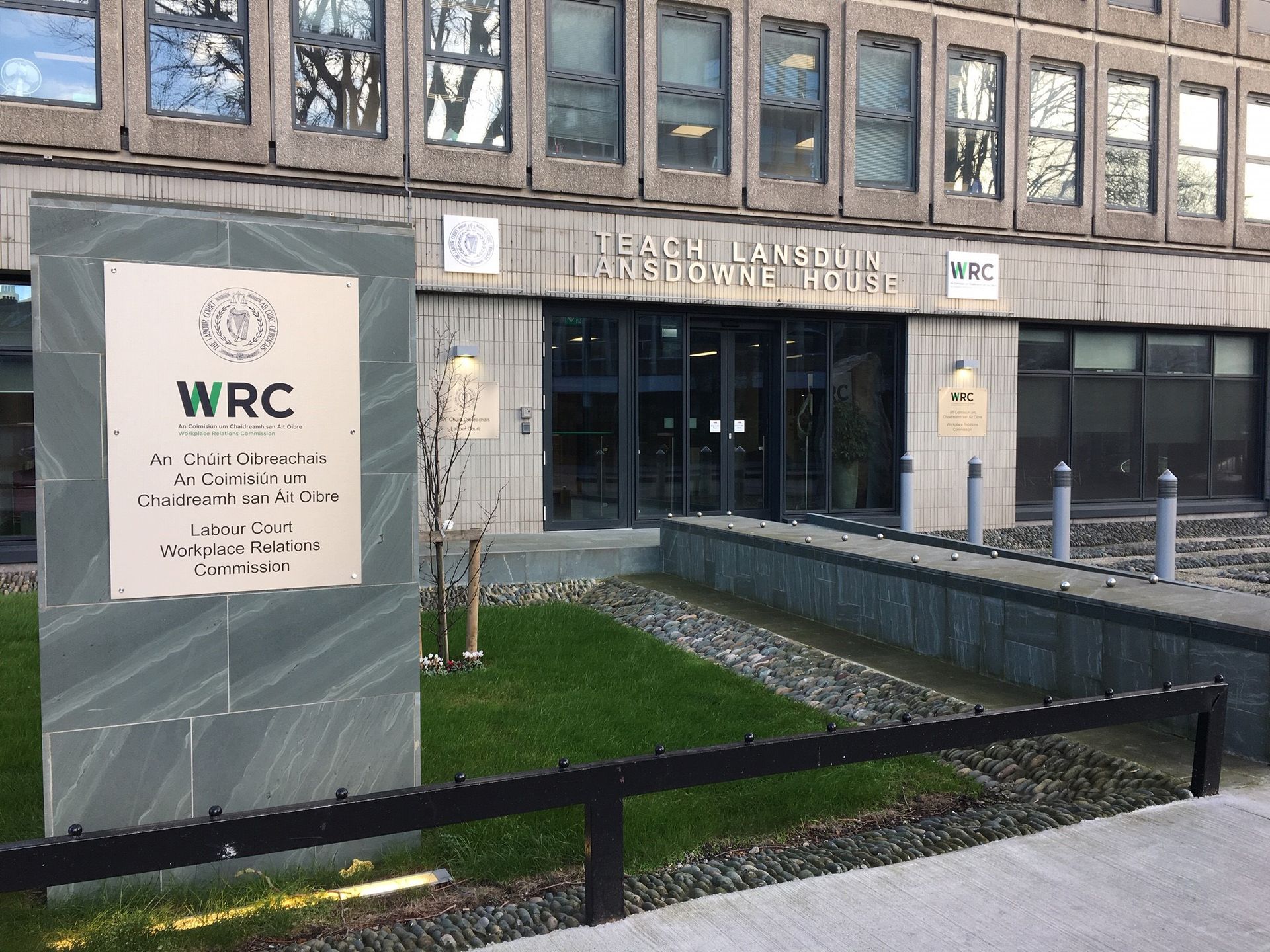
For employers and HR professionals, 2022 has been a year of significant changes and major developments in many aspects of employment Law, and the case law reflects this. In 2022 we saw new legislation enhance employee rights and the WRC awarding a claimant the largest award in its history and, in two other cases, made it clear that it was not afraid of awarding six figures’ sums when deemed appropriate.


Below, we have reviewed some of the more important and noteworthy decisions from the WRC and in Employment Law;


6 Figure Awards


A Sales Executive v A Software Company


In June 2022, the WRC awarded the largest sum ever for an unfair dismissal case. The claimant was awarded €329,199.00. The Employee was dismissed on the grounds of serious misconduct, following bullying allegations.


The WRC found that despite the fact that there was an employee handbook in place, the employee received no formal warning in line with the process set out in the handbook. In short, the company failed to follow the terms of the handbook and its own procedures.

The award was high as it took the employee 22 months to find alternative employment, partially due to the “niche sector” and partially due to the reason for the dismissal.


This should be a lesson to employers that ensuring adherence to their existing policies and procedures is crucial.


https://www.workplacerelations.ie/en/cases/2022/april/adj-00027573.html


Walsh v Econocom Digital Finance


Here the WRC awarded €120,000.00 for an Unfair Dismissal. Whilst the Adjudicator accepted that it was a genuine redundancy situation and that any appeal would likely be a futile exercise, it found that no credible explanation was given for the decision of the managers not to engage with the Complainant to identify a suitable alternative role or to extend his notice period so that he could find another job.


This serves as a reminder to employers of the importance of consulting with employees in relation to any reasonable alternative roles that may be available should their existing roles be declared redundant.


https://www.workplacerelations.ie/en/cases/2022/january/adj-00029093.html


Reddy v Ardbrook Redundancy ADJ 29419


In this case, the WRC awarded a manager €119,000.00 in an award for unfair dismissal, after finding that the employee was dismissed “under the cloak of Redundancy”. Further, the WRC found that there were procedural errors in the redundancy process as admitted by the company.


While the facts in this case vary, it shows that the WRC is not afraid of making substantial awards where there are procedural flaws in the dismissal of an employee.


https://www.workplacerelations.ie/en/cases/2022/january/adj-00029419.html


Data Protection Commissioner v Doolin [2022] IECA 117.


In 2022 the Court of Appeal considered the use of CCTV footage in internal disciplinary investigations. The Court of Appeal reaffirmed the dangers of the use of CCTV for employee monitoring and using CCTV for a purpose not specified by the employer to the employees.


The Court held that the Data Protection Commission (DPC) was incorrect to state that the CCTV footage was only processed when it was viewed by the employer. In fact, it found it was processed three times:

a)   it was initially processed when it was recorded;

b)   it was then processed once more when it was accessed by the investigators; and

c)   processing then occurred a third time when data of dates and times were set out in the final disciplinary report.


Ultimately the Court felt that the concept of notifying the employee of the purpose for which CCTV was being used was central to the case, and data can only be used for the purpose of processing at or before the time the data (CCTV) was collected, and the purpose cannot be remedied after the fact.


This is a reaffirmation and strong reminder that businesses need to have effective and compliant data protection policies and CCTV policies, which clearly identify how and when such data can be used.


https://www.courts.ie/view/judgments/6ca61b58-4057-4572-99f5-5a93146d0bb6/66b46093-5fd1-4fff-86dd-11703bff3952/2022_IECA_117.pdf/pdf


Keating V Camfil


Finally, in an interesting case, the WRC found that an employee, who was dismissed for being on holiday while being unable to work due to a bad back, lost her unfair dismissal case. However, she was awarded €3,900.00 for withheld annual leave and public holiday entitlements.


This is an important case; in that it clearly shows that an employee’s annual leave and public holiday entitlements are theirs and cannot be withheld by the employer for any reason.


https://www.workplacerelations.ie/en/cases/2022/august/adj-00030501.html


As always, at MSS - the HR People we are here to advise you on any of the matters outlined in this update.



Contact Us
By Tara Daly December 11, 2025
SMEs Should Prepare Now for 2026 As we reach the end of 2025, the Workplace Relations Commission is continuing to increase its inspection activity. Over the past three years, inspections have become more frequent, more targeted, and increasingly unannounced, a trend that shows no sign of slowing as we move into 2026. For employers, especially SMEs with limited internal HR capacity, this means one thing: the best time to prepare is now, before year-end pressures take over and before the next inspection cycle begins. Inspection Activity Has Risen Year on Year Publicly available data shows a clear upward trend: • 2022: 3,943 inspections, approx. 60% unannounced • 2023: 4,727 inspections, 3,662 unannounced (approx. 77 %) • 2024: 5,156 inspections, with the WRC confirming a further increase in unannounced site visits, particularly in targeted and joint operations (eg. Revenue, Garda National Immigration Bureau, Social Welfare, etc.) That is a 30% rise in total inspections in just two years, and early indications suggest the WRC will maintain this pace into 2026. Why This Matters for SMEs SMEs make up over 99% of businesses in Ireland, and many do not have a dedicated HR or compliance function. This makes them more vulnerable during an unannounced WRC inspection, where documentation must be produced immediately and the consequences of being unprepared are far more significant for SMEs who cannot absorb: • Financial penalties • Compliance orders • Disruption to operations • Reputational damage • Staff time diverted to crisis management With the increasing trend in enforcement activity and unannounced visits, SMEs should assume they could be selected for inspection in 2026 and ensure they have the systems, documentation and records ready. Why Employers Need to Be Ready Going Into 2026 The WRC’s annual reports typically publish in Q2, meaning the full 2025 inspection breakdown will not be available until mid-2026. However, current patterns indicate: • Increased unannounced inspections across all sectors • More joint visits with Revenue, Social Protection and Gardaí • Focus on working time, payroll accuracy, permits and record-keeping • Less tolerance for incomplete or inconsistent documentation Preparing now ensures your business, particularly if you are an SME without in-house support, is not left vulnerable. Key Areas Under Scrutiny During an inspection, employers must produce statutory documentation immediately, including: • Contracts of employment • Working time and break records • Payroll and pay-reference-period data • Annual leave and public holiday records and calculations • Employment permit documentation • HR policies, procedures and statutory records MSS- WRC Inspection Preparation Audit (Particularly designed for SMEs) Our Audit help employers get ahead before year-end, MSS The HR People offer a structured WRC Inspection Preparation Audit, specifically designed to support SMEs who may not have a full HR team. Our six-step process includes: Compliance Audit: Review of contracts, policies and statutory documentation Record-Keeping & Documentation Review: Templates and statutory checklists Corrective Action Plan: Clear and practical steps to close any gaps Mock WRC Inspection: A simulated visit with a full written report On-Call Support on the Day: Expert HR assistance during a live inspection Post-Inspection Follow-Up: Support responding to any findings or compliance orders This proactive audit protects SMEs from risk, disruption and penalties and provides peace of mind heading into 2026. Prepare Now, Avoid Pressure Later We are observing instances where a WRC inspection coincides with an employer having a live or upcoming WRC complaint listed for hearing. While this does not indicate any direct link between the two processes, it highlights an important practical point for employers: if you have a pending WRC case, it is prudent to ensure that all employment records, contracts, policies and statutory documentation are fully up to date and compliant. A scheduled hearing can often prompt an employer to review their practices, but by that stage it may be too late to correct underlying non-compliance identified during an inspection. Taking proactive steps early can significantly reduce risk and demonstrate good faith if those records become relevant in any subsequent proceedings. December and January is an ideal time for employers, particularly SMEs, to review compliance, update records and identify any gaps as the new year begins. Preparing now ensures you are fully inspection-ready for 2026. If you would like support preparing for a WRC inspection or wish to arrange a pre-inspection audit, our HR Partners are ready to assist. info@mssthehrpeople.ie , Ph: +353 1 887 0690, www.mssthehrpeople.ie
By Tara Daly December 11, 2025
What Employers Need to Do Before Year End
By Tara Daly December 11, 2025
A Warning for Employers and the Importance of Compliance 
By Tara Daly December 11, 2025
With effect from on 1 st January 2026, the national minimum hourly rate will become €14.15. The full rate applies to any employee who is at least 20 years of age except as detailed below; EMPLOYEE MINIMUM HOURLY RATE Aged 20 or more - €14.15 (100%) Aged 19 - €12.735 (90%) Aged 18 - €11.32 (80%) Aged under 18 - €9.905 (70%) Who does it not apply to?  The National Minimum Wage rate does not apply to the remuneration of a person who is; The spouse, father, mother, grandfather, step-father, step-mother, son, daughter, step-son, step-daughter, grandson, grand-daughter, brother, sister, half-brother or half-sister of an employer, employed by the employer, or A craft apprentice within the meaning of or under the Industrial Training Act, 1967, or the Labour Services Act, 1987. Alternative minimum rates may be set down under Sectoral Employment Agreements (SEAs) or created by Employment Regulation Orders - Workplace Relations Commission . Working Hours Full time, part time, temporary, casual or seasonable employees are all entitled to the National Minimum Wage for hours worked. Calculation of Hourly Pay (Reckonable Pay) Reckonable pay means payments that are allowable in calculating an average hourly rate of pay under the National Minimum Wage Act. The following payments may be taken into account when determining average hourly rate of pay. Basic Pay Shift Premium Piece/Incentive Rate. Commission Any payments under section 18 of the Organisation of Working Time Act, 1997 (zero-hour protection) Productivity-related bonuses Service charge paid through payroll Board of Lodgings- If you receive board or lodgings, that is food or accommodation from your employer, the maximum amounts that can be included from 1 January 2026 are for: - - board only €1.27 per hour worked - accommodation only €33.42 per week or €4.77 per day Non- Reckonable Pay The following payments cannot be included to make up the national minimum wage rate: Overtime, call-out premiums, service pay, weekend and public holiday premiums, expenses incurred by the employee in carrying out their employment, unsociable hours premiums, tips or gratuities paid through the payroll, and allowances for special or additional duties may not be included, benefit in kind payments (except board of lodging), payments while absent from work i.e. sick pay, pension contributions, redundancy payments, compensation for injury, employer loan, an advance on wage/ salary, any sum payable to an employee in lieu of notice of termination of employment. Pay Reference Period The period over which you may calculate the average earnings (Pay Reference Period) may be a week, or a fortnight but must not be longer than one month. Employers are obliged to advise employees of the pay reference period they are selecting for calculations of minimum pay. Employees must be notified in writing as part of their Terms and Conditions of Employment. An employee may request from his or her employer a written statement of the employee's average hourly rate of pay for any pay reference period (other than the employee's current pay reference period) falling within the 12-month period immediately preceding the request. Employee Complaints An employee may make a complaint to the Workplace Relations Commission to investigate allegations of failure by the employer to pay the National Minimum wage or victimisation of an Employee. Such a referral must be within 6 months from the date of receipt of a written statement or from the latest date the employer should have given a written statement. Employees may not refer a complaint before requesting a written statement from their employer. Steps for Employers Employers should now implement the required changes to the rate of pay for those who are currently earning less than the new National Minimum Wage. There is no automatic right of an increase to those who are already earning in excess of the minimum wage. However, it is likely that some employers may face requests for the same. Whilst ordinarily there is no need for an Employer to notify an Employee that the National Minimum has been increased, some employers choose to issue a letter confirming their new rate of pay and the date on which it will be reflected in their pay. A template for this letter can be found on our HR Hub. Minimum Wage in Review With this most recent increase in the National Minimum Wage, an employee on minimum wage who works a full 39-hour week will now receive an additional €40.90 per week, or an extra €2,129.40 gross per year. It remains to be seen how employers will cope with these increases. As the new National Minimum Wage rate takes effect from 1 st January 2026, employers should take the time to review their current pay structures, budgets, and payroll systems to ensure full compliance. Staying proactive and informed will help employers manage these adjustments smoothly and maintain positive employee relations in an evolving pay landscape. If you require any assistance in reviewing pay structures, updating employment contracts, or ensuring full compliance with the new National Minimum Wage obligations, our team is here to help. You can contact MSS The HR People on 01 8870690 or email info@mssthehrpeople.ie and we will be happy to support you.
Eir’s Mandatory Retirement Age Found to Be Lawful
By Tara Daly November 13, 2025
WRC has upheld Eir’s decision to retire a long serving technician, finding that the company’s mandatory retirement policy was justified and consistently applied.
Chinese Chef Awarded €154,828 for Gross Breaches of his Employment Rights
By Tara Daly November 13, 2025
A recent WRC decision has brought into focus the vulnerability of migrant workers and the serious consequences for employers who fail to comply with employment law.
New Employment Regulation Order (ERO) for Early Years and Childcare
By Tara Daly November 13, 2025
New Employment Regulation Order (ERO) for the Early Learning & Childcare (ELC) sector came into effect on 13 October 2025.
2025 Employment Regulation Order (ERO) for the Contract Cleaning Sector
By Tara Daly November 13, 2025
New Employment Regulation Order (ERO) for the Contract Cleaning sector, which came into effect on 17 October 2025.
The 2026 Minimum Wage Increase — What It Means for Small Businesses and How to Get Ready
By Tara Daly October 22, 2025
The increase to €14.15 per hour will have a noticeable effect on small and medium sized businesses.
WRC Award €22k for Dismissal Regarding Sexually Explicit Texts
By Tara Daly October 14, 2025
A recent Workplace Relations Commission (WRC) ruling has once again reinforced one of the most important principles in employment law.